

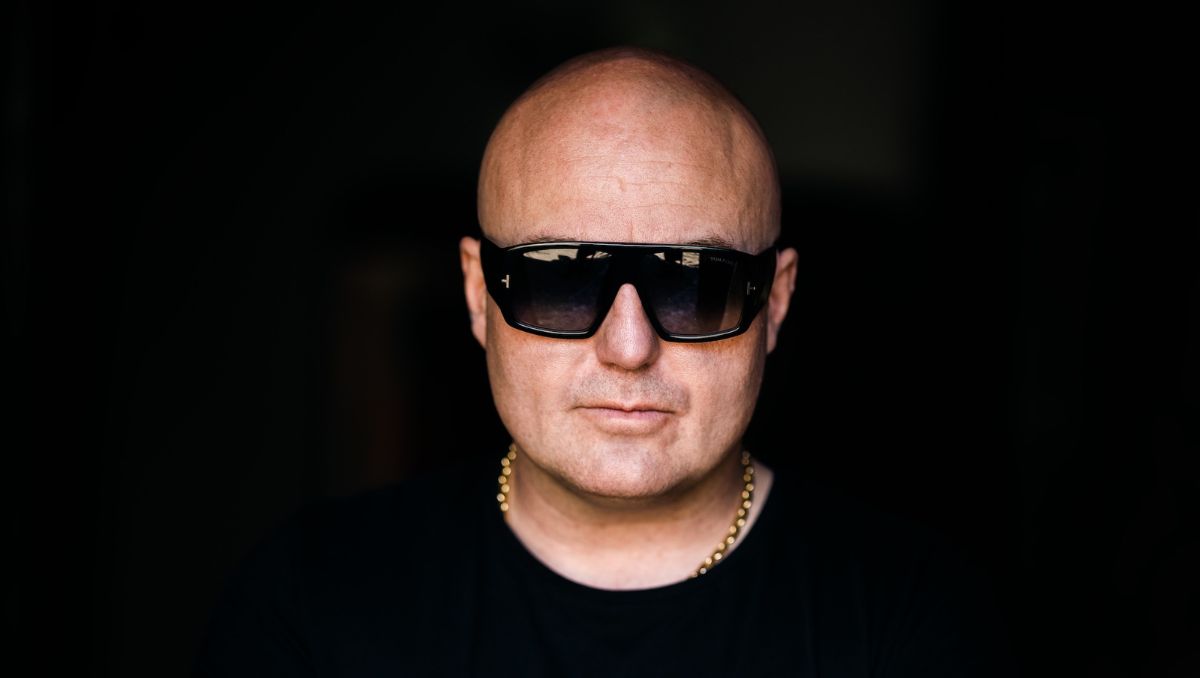
BAKKIS has spent enough time on both sides of the DJ booth to understand how differently music behaves once it leaves the studio. The Norwegian DJ, producer and R-TRYBE co-founder brings that experience to Emphasize, his latest release for the platform he runs alongside Huxley and Ramin Rezaie.
Here, the conversation moves beyond the single into some of the bigger questions surrounding club music today: how DJs learn to read rooms, what makes a record memorable, the value of producers working together in person, R-TRYBE’s growing community and the uneasy influence of hype and social media on contemporary club culture.
Club music is ultimately tested in a room full of people. How much does imagining that room still shape the decisions you make when producing?
It definitely plays a part, but it depends on the track. I’m not always sitting there imagining a club or a dancefloor when I’m producing. Sometimes I do, especially when I’m thinking about the arrangement and energy, but other tracks can take me somewhere completely different. Music can bring up a certain emotion, a memory, a place or even make me think about certain people. Sometimes I’ll have a whole scenario in my head that has nothing to do with a club. I think those feelings can influence the direction of a track just as much as imagining how it might work on a dancefloor. Being a DJ, the club side is always somewhere in the back of my mind, particularly later in the process when I’m working on the arrangement. But the initial idea is much more instinctive for me. I want to follow whatever feeling or image the music gives me rather than always thinking about how a crowd is going to react.
What have you learnt from DJing that you don’t think you could ever have learnt sitting in a studio?
Understanding how music actually feels in a room full of people. You can sit in the studio and analyse a track for hours, but playing it in a club on a proper sound system can completely change your perception of it. DJing teaches you how to read a room and understand energy in a way that’s very difficult to learn in the studio. You start to feel when a crowd is ready for more, when you need to hold something back, or when the best thing you can do is just let a groove run. It’s also taught me that the smallest details you obsess over in the studio aren’t always the things that matter on the dancefloor. Sometimes a very simple record can have an incredible effect on a crowd because it has the right groove, energy or feeling. I also find it really interesting how much context can change the way you hear a track. Where you are, who you’re with, what was played before it and the energy in the room can completely change your connection to a piece of music. A track you might not have thought much about before can suddenly become something you have a real attachment to because of the moment you experienced it in.
Emphasize builds its energy gradually and leaves plenty of space in the arrangement. Where do you imagine it working best in a set, and does that enter your thinking while you’re writing?
I hardly ever think about where a track will fit in a set while I’m making it. I always try to follow the vibe and see where the track takes me rather than deciding in advance what its purpose should be. Once it’s finished, I might start thinking about where I could see it working in a set, but not really during the creative process. It’s quite similar to how I approach DJing. I don’t like to plan my sets track by track. I’ll prepare a pool of music that I think could work for a particular gig, but once I’m there I want to react to the room and play what I feel the crowd needs at that moment. And quite often I’ll end up going outside what I prepared completely if that’s where the vibe takes me. With Emphasize, I could imagine it working when I want to bring in something more melodic and emotional, and I think it can work really well as part of a longer journey in a set. But that could happen at different points depending on the night. For me, it’s much more about following the energy of the moment.
Do you think producers are sometimes guilty of making records for other producers rather than for dancers? How do you avoid getting caught in that?
Definitely, and I think it’s quite easy to fall into that trap, especially when you’re surrounded by other producers. You can start focusing on whether something is technically impressive or whether another producer will notice a clever detail, rather than asking the more important question: does the track actually make you feel something? I’ve definitely got better at relaxing about that over the years and not overthinking every little detail, but I think it’s something you have to stay conscious of. Learning to trust yourself takes time and practice. The more music you make, the more you start to understand your own taste and when to trust your instincts. At the same time, I’d be lying if I said I don’t want other producers to like my tracks. I’m a producer myself, so of course it feels good when someone whose work you respect appreciates what you’ve done. The important thing for me is not letting that become the reason I’m making certain decisions. Most people on a dancefloor aren’t thinking about how you processed a sound or how complicated the production is. They’re reacting to the groove, the energy and the feeling of the record. So I try to keep coming back to that. I want producers to appreciate the track, but I don’t want to make a track specifically to impress producers.
The way DJs use melodic house has changed quite a bit over the past few years. What are you hearing in clubs at the moment that genuinely interests you?
What interests me at the moment is probably less one particular sound and more how much DJs are moving between different styles within a set. You can hear something quite melodic next to something much more stripped-back and groove-driven, and if the energy and the journey make sense, it works. I’ve never really wanted to stay in one very narrow lane with my own music either. Emphasize is definitely on the more melodic side of what I do, but I also make much more straight-up house and groove-focused records. For me, the interesting DJs are the ones who can bring those different worlds together without it feeling forced. I’m much more interested in hearing someone create a journey and surprise me a little than hearing two hours where every record sits within exactly the same subgenre and eventually starts to feel like you’re listening to different versions of the same track.
R-TRYBE puts producers into direct contact with one another through feedback, collaboration and writing retreats. Do you think electronic music lost some of that exchange when production became increasingly home-based and online?
I think there’s definitely a bit of a contradiction there. Technology has made it easier than ever for producers to connect, share music and collaborate with people anywhere in the world, but actually making music can still be a very isolated process. In my case, I probably wouldn’t even have got into production in the same way if it hadn’t been for the internet. When I started, I didn’t know many producers in my hometown of Bergen, so a lot of my early network was actually abroad. The internet gave me access to people, knowledge and connections that I simply didn’t have around me locally. These days it’s very different and I’m connected with a lot of producers here in Bergen as well. So I definitely don’t think everything was better before production became more home-based and online. But I do think there’s something you get from being around other creative people that’s difficult to recreate online. Sometimes it’s not even about collaborating directly. It’s hearing what someone else is working on, having a conversation about music or seeing how another producer approaches something that can spark an idea.That’s something we’ve really noticed with R-TRYBE as well. The online side allows us to bring producers together from all over the world, but whenever those relationships become more personal, something different happens. Technology is amazing for creating those connections and keeping them going, but for me, nothing really beats meeting people face to face.
You’ve seen a lot of unfinished music through R-TRYBE. What separates a technically accomplished track from one you can actually imagine having a life in clubs?
For me, it’s whether there’s something in the track that grabs you and stays with you. A record can be technically really well produced, but if I can’t remember anything about it five minutes later, it’s difficult to imagine it having a life in clubs.That doesn’t mean it needs a huge hook or something obvious. It could be a groove, a vocal, a bassline, a strange sound or just a certain feeling the track creates. Sometimes it’s actually something very simple that gives a record its identity. Through R-TRYBE I’ve heard tracks where technically there are things that could definitely be improved, but there’s an idea or an energy in there that immediately makes you want to hear it again. For me, that’s much more exciting because the technical side can usually be worked on. It’s much harder to teach someone how to put personality into a record. Ultimately, I think the tracks that have a life in clubs are the ones that create some kind of reaction. People don’t need to know why they like it, they just need to feel something when they hear it.
The R-TRYBE retreats bring people together to write in the same physical space. How different are the records that emerge when producers are responding to each other in real time?
It’s interesting because at our retreats it’s not necessarily about everyone sitting together and collaborating on the same records. Most people are still working on their own music, but they’re doing it surrounded by other producers and coaches, and I think that definitely affects what comes out. There’s an energy in the room that you feed off. You hear what other people are working on, you can immediately ask someone for an opinion, get feedback from one of the coaches or just have a conversation that sends you in a different direction. And when everyone around you is being productive, it pushes you to keep going as well. Our last retreat really showed that. The amount of music that came out of those few days was incredible, with one producer actually making six tracks. It’s also a very supportive environment where people encourage each other and genuinely want to see each other do well. I think that makes people a bit more fearless creatively and gives them the confidence to experiment and try things they might otherwise overthink. The records are still very much the individual producers‘ records, but I think the environment leaves its mark on them. Sometimes it’s less about directly responding to another producer and more about responding to the collective energy around you.
With Dennis de Laat’s remix of Emphasize, you effectively get two different readings of the same dancefloor idea. What does his version tell you about the original that you hadn’t necessarily heard yourself?
I think that’s one of the most interesting things about having someone remix your music. You’ve spent so much time with the original that you start to hear the elements in a certain way, and then someone else gets the stems and hears different possibilities in them. Dennis took some of the same ingredients and gave them a much more driving and dramatic energy. It made me realise that there was a more powerful and intense side to the original idea. The melodic identity is still there, but the context around it completely changes how you experience it. That’s what I really liked about his remix. It still feels connected to Emphasize, but it also sounds completely like Dennis. He took it somewhere I wouldn’t naturally have taken it myself, and for me that’s exactly what makes a remix interesting.
If you could change one thing about contemporary club culture, whether that’s line-ups, crowds, DJing, venues or the music itself, what would you change?
I’d probably like to see a little less focus on hype and more focus on what actually happens in the room. Sometimes it feels like people are more interested in showing that they were there when a certain hyped DJ was playing than actually being present and connecting with the music. Social media has obviously become a huge part of club culture, but I think there’s a balance. I’d also love to see more opportunities for DJs who might not have the biggest profile but really know how to play a room and take people on a journey. Some of the best sets I’ve heard haven’t necessarily come from the biggest name on the lineup. For me, a great night is when the DJ, the crowd and the venue all connect and you forget about everything else for a few hours. That’s the part of club culture I never want to lose. It actually comes back to one of the main things we believe in with R-TRYBE and try to keep at the heart of everything we do: Music First.
Emphasize is out now on R-TRYBE. To learn more, head to: https://rtrybe.com/




 and then