

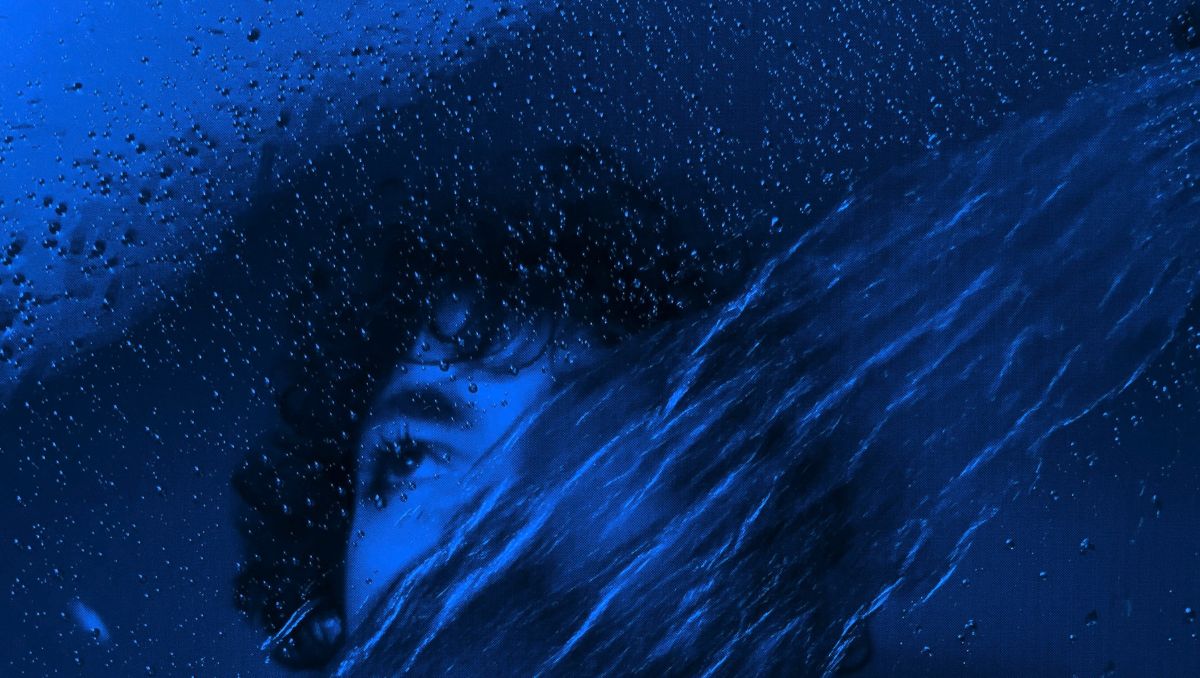
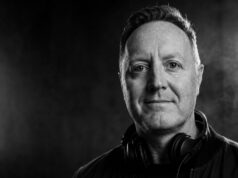
Berlin-based composer and producer Lang Father has spent much of his career moving between different musical worlds, from artist collaborations and work with Timbaland to film scoring, hip hop and electronic music. His latest release, I (Junkyard Dog), brings one of his longer-standing influences firmly to the foreground.
Released via WeLoFi, the two-track EP draws on the deeper strains of house that have followed him since his early club experiences in Dublin and New York, while retaining the compositional instincts that underpin his wider work. Here, Lang Father discusses his route into house music, Berlin’s influence on his creative life, working across music and visual art, and what he has learned from producing for other artists.
What was the first house record that made you want to understand how this music was put together, rather than simply listen to it?
I don’t think I could point to one specific record. It was more a myriad of different experiences, starting early: going to house club nights in Dublin and then New York. This was before I moved to or even visited berlin, and that transferring into an interest in the earlier Chicago and Detroit stuff. Artists like Larry Heard, Louie Vega, and especially Moodymann. I was really drawn to those late ’90s records, and it wasn’t just one thing; I was interested in the different strands of music feeding into that world, and into those musical practices and ways of understanding sound.
When I moved to Berlin the focus was actually more on the idea of composition for Film/Tv/On Screen/Art projects. That was always a deep routed goal and I needed to be in a place where I could study and develop that part of myself. Berlin felt like the right place.
As I started building myself as a producer, I was always dabbling with electronic and four to the floor music, but I wasn’t putting any of it out. It was something I immersed myself in and experimented with privately. UK garage was another one, in the vein of Burial or Kode9, that hyperdub world. I never thought I could actually do that myself. I saw myself as a fan of that world, influenced by club music and by what happens on the floor, but I couldn’t imagine making it. I was hip-hop, I was drill, and that’s what I released and worked on, along with R&B.
But in my heart, I was always more of a writer and composer who used production as a way to express myself and build a career. For a long time, my attitude was that’s not for me, I don’t think I can do that. Then, as I kept going, I started finding things where I thought, okay, I want to release this. And now I’m at a point where I want this to really be part of who I am as a creative. It just took time to get to a place where I felt ready to say that. And on top of that, my creative director Weronka Kaźmierczak and developed a really incredible aesthetic language with the music or this single so the elements really started to feel special.
I (Junkyard Dog) and Runnin’ feel pretty restrained in their construction. When you’re producing, what usually tells you that a track needs less rather than more?
I couldn’t really tell you what exactly tells me when a track needs less or more, or where it needs to go. I just knew I had intentions, especially with Junkyard Dog. I really wanted to create an atmosphere, a musical bed that allowed thoughts to flow, similar to what Iggy Pop said about the first Neu! album. There’s an interview where he talks about how it unlocks pieces of your mind, allowing thoughts to occupy those spaces and take you in certain directions. I was really inspired by that thought process, and that was the first inkling of what I wanted the track to feel like: to create a musical space rather than a direct compositional movement.
For example, that saxophone part was actually a solo that went on much longer, with different compositional movements where the chords and bass moved along to support it. I took all of that out and turned it into a refrain at the end that lands in a musical triad with the vocal sample. That takes you out of the A section into the breakdown, and then into the finale, or C section, which is where the vocals actually tell you what they’re trying to say. So everything was really specific to intention, but done with as little as possible, which is very different from what I do when I’m composing for screen. Obviously you don’t want to overdo it there either, but there are compositional phrasings happening in screen work that I wanted to get rid of as much as possible here.
It was also very instinctual. This all came together fast after a trip to Paris, going to some Paris house parties. I was just thinking, what did that feel like? What did that trip feel like? It was also a trip where I was working on a short film that never actually came out. So it was about recreating that feeling. I guess I’m soundtracking again, but it’s soundtracking life rather than a film.
You’ve spent a lot of your career writing music for other contexts and other people. What changes when there’s nobody else to answer to and the record only has to satisfy you?
I could really do whatever I wanted, which was something new. I knew I was going to release this, and it was something I had been working towards for a while. I also knew the label would respond to it because I wanted to release it with them, so there was always going to be that process of them approving it. But I knew, from the very beginning, that this was exactly what I wanted these records to sound like.
That doesn’t necessarily mean it’s what I’ll do in the future. The music may become cleaner, more extravagant, or simply bigger in scope. However it evolves, I knew I wanted this first release to be tight and concise. Two tracks, maybe three at the most, and it eventually became two. I wanted it to sound exactly like this: the lo fi quality of it, but with this richness in the low end. It feels big, but it’s also very contained and minimal.
That freedom meant I could really go anywhere with it, or almost nowhere, in terms of how little or how much was happening compositionally. That’s completely different from working for somebody else. When you’re composing for another artist or for a project, you have a brief. There are very specific ideas, sometimes even instrumentation or BPMs. Everything can be incredibly finite.
As a producer, I was always interested in finding an uncharted element for the records I worked on. When I worked with Fetty Wap, for example, I sent him music that I thought would really suit his voice, but in a context that was different from what he usually did. It was much more pared back and much more rooted in rap, which wasn’t always the lane he was known for.
Now I’m in a position where I’m starting to ask myself what I actually want to release under my own name, as my own creative identity, rather than working in service of someone else’s project. At the moment, making more experimental dance music feels like the direction my instincts, or maybe my soul, are pulling me towards.
That said, I’ve worked across a lot of different genres, so I could easily see it moving into other areas over time. I think it really depends on how this audience develops and how much of a place I can build for myself within this world. Hopefully, as that grows, I’ll have the freedom to branch off into other little pocket universes and just follow wherever my sense of expression takes me.
Berlin can expose you to an absurd amount of electronic music in a relatively short space of time. Has living there changed your taste at all?
I think it was less of a change in my taste and more of a deepening of my relationship with electronic music, specifically music for the dance floor, and really understanding what that means.
For example, I’ve been a Tresor Records fan since I was about fifteen. I was completely fascinated by the sound of that world, and even something as simple as the logo. For a while, I became friendly with one of the owners, and I’d constantly pick her brain about how they built it, why they first went to Detroit, and how that whole story unfolded. She’s a fantastic person, and those conversations gave me a much deeper appreciation for what that label represents beyond just the records themselves.
Then there was Berlin itself. The city has such an extensive art scene, and there is a genuine respect for film and contemporary culture. It was this combination of music, visual art, cinema, and creative communities all interacting with one another that had a really profound effect on me. It became questions like, “I want to make music for art galleries,” which I did last year. “I want to compose for film.” And then it became, “If I’m making dance music, what do I actually want to make? What am I trying to say through it?” I think this release is really the beginning of answering that question for myself. So it feels much more like an expansion than a change.
At the same time, I became fascinated by what these clubs actually mean for Berlin and what they came to mean for me as someone experiencing them. There’s this complete separation from everyday life when you walk into somewhere like RSO, Sisyphos, or Tresor. You step into this sound bath where you’re completely immersed, and that feeling had a huge impact on how I thought about dance music.
So I don’t think my taste fundamentally changed. I think it simply became much deeper, and I began to understand much more clearly where I fit within that world and what I wanted to contribute to it.
And on a more practical level, where in Berlin are you actually finding interesting music at the moment? Clubs, record shops, radio, friends, anywhere really.
I think the main way I discover music is still online, through a lot of searching and digging. A big part of that comes from finding DJ sets from artists that I’ve discovered through clubs, or through recommendations from friends. That’s probably been the biggest source for me, especially recently.
When I first moved, I was going out to clubs a lot and really immersing myself in that world. Then, as I became more focused on composing and developing myself as a composer, I started seeking out different kinds of experiences where music was the central focus, whether that was symphonies, galleries, or film. At one point I was going to the cinema three or four times a week because I was really interested in how music functions in a visual context.
More recently, especially in 2026, my health improved after being sick for a lot of 2025, and I started returning to clubs, travelling to Paris again, and reconnecting with that side of music. So that became another important source of inspiration.
But ultimately I’m just a huge music addict. I’ll find inspiration in almost anything, whether that’s digging through streaming platforms, SoundCloud, social media, or just sharing music with friends. For me, it’s less about one specific source and more about constantly searching and being open to finding something unexpected.
How important is sound outside music to you? Do conversations, street noise, films or random bits of audio ever end up becoming the starting point for a track?
Absolutely. Conversations, street noise, and just everyday environments are a huge part of it. There’s actually a clip from a film at the beginning of this record, and I did something similar on the last EP I released with We Lo Fi. That project had samples and references from things like The Batman, BoJack Horseman, Purple Rain, and Ma Rainey’s Black Bottom. So dialogue from films, specific lines, or even just the feeling of a scene can become a starting point for an idea.
I’m also really inspired by things I hear in real life: conversations I overhear in parks, things people say at clubs, little moments that stick with me. If it’s in English and there’s something interesting about the phrase or the emotion behind it, it can spark an idea. I keep my laptop with me a lot, so I’m sometimes that person sitting on a bench somewhere with headphones on making music. I’ll make things in all kinds of places.
More recently, one of the biggest influences on the music I’ve been making has been working with my creative director, Weronika. I’ll often start with something very small, maybe just an idea or a feeling, and send it to her. Because she’s also a photographer and graphic designer, she might respond with images she’s taken, photos of me, or other visual references, and those things can completely shift the direction of the music. We’ve started working almost like one creative unit, where the visual world and the musical world develop together.
You’ve mentioned Moodymann and Theo Parrish as influences, but who would be a much less obvious reference point for what you’re doing with Lang Father?
That’s could be an endless, endless list from a million different references, from films to artists, contemporary artists, painters, just producers, composers. I think if I had to give somebody that’s less obvious for this, it would be just the label of We Lo-Fi has been a big influence, especially the Isolation album that they did in 2020. There was a reason is only reached out to them to start putting out music in 2024 ya know. That was, a starting point for me to kind of find where I was trying to go as a producer. And then, like, my goats would be people like, you know, Burial and D.A.F., Neu!, Hildur Guðnadóttir, Madlib,(I have the Quasimodo character tatted), Karenn, John Coltrane. It could go on and on and on but I never look at influence in a very direct sense it’s kind of this filtering down of where I’m trying to take a piece of music, finite details come from from a much more expansive beginning. Also, just the work my creative director and I do together has become a huge influence for me.
You’ve worked in rooms with people operating at a very high level, including Timbaland. Has that experience changed what you value in a producer, or perhaps made you less impressed by technical ability on its own?
Not at all. It’s actually just made me more interested in what different people can bring to a project, or what they’re strengths are, and how that relates to what you can learn from them, or what you find interesting in them, or just what you find interesting in composition and production as a whole. You know, like some people are, like, incredible ideas people. They have bigger concepts. Some people are, like, really, really good at bringing, like, tiny detailed pieces to the puzzle. And it’s just, like, learning more about yourself as a person as well as a producer. And, yeah, I guess also just, like, learning how to just be more attune to what’s happening around you in those kinds of situations. You know, everything is so collaborative, but it’s so fast that you have to be on your toes and be able to think really, really quickly. And that’s a really challenging and fun way to work, and it’s high-pressure, but in a good way. What I’m doing now is much more fluid and much slower, which I really appreciate, being able to live in both worlds at one point or another.
With more house records, soundtrack work and an instrumental hip hop album all underway, what are you making right now that feels furthest removed from I (Junkyard Dog)?
I’d say the composition stuff, the soundtrack and score work, is probably the furthest away from the other things that I make. A huge focus for me as a composer has been creating the rescoring videos that I’ve been putting on my website and social media. My website is http://babybird.site, and that’s really where I’ve been presenting myself as a film, TV, and art exhibition composer.
The process usually starts with a film and a piece of music that’s nowhere near finished. It’s usually very abstract, more like conceptual ideas and emotions that I want to explore. I’ll pick a film, and then with Weronika we’ll start building a supercut of the film, usually around four or five minutes, and I’ll begin scoring to that edit. We’ll gradually build the piece together. I’ll have an idea of what I’m looking for, then we’ll shape the visuals and music alongside each other until they become one thing.
After that, we’ll create a shorter 15 or 20-second version for social media, while the full four or five-minute version lives on the website. That process has really been about showing myself as a composer and building that identity around film, television, and gallery work.
It’s probably the most detailed and compositionally focused side of what I do. It’s much more rooted in classical composition, using strings, brass, sound design, and heavy percussion to build a full sonic world. I did take a break from that recently to focus more on some house music ideas and the next stage of my electronic work, so that’s going to be more at the forefront of what I’m making for a while.
But from a bigger perspective, the scoring work has been the main focus of my development as a composer, and it’s probably the thing furthest away from Junkyard Dog or the single that will follow it, which I’m still working on.


 and then