

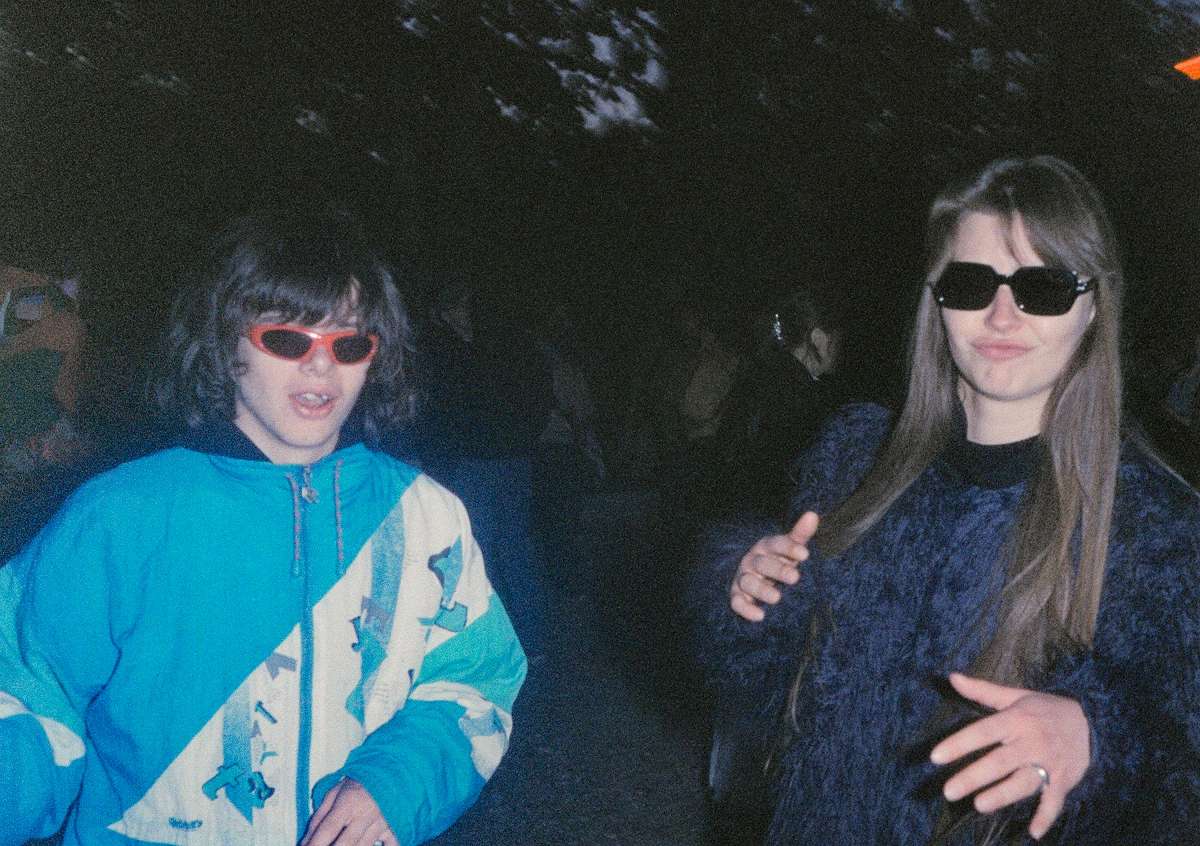
Thematic Focus: The premise is that clubs were central spaces for democratic negotiation after the fall of the Berlin Wall. The aim is to showcase club culture as a vessel for the history of democracy, deliberately stepping away from the usual West Berlin narratives to highlight East German and underrepresented perspectives.
Timeframe: The exhibition will take place from October 3rd to November 9th, 2026, in Berlin.
To make this happen, an Open Call has been launched. They are asking contemporary witnesses to submit archival material, personal memories, and anecdotes. The exhibition will be curated and cobbled together from these submissions.
Background & Funding: The whole thing is a collaborative project, bankrolled by the Stiftung Orte der deutschen Demokratiegeschichte (Foundation of Places of German Democratic History) and the Berlin Senate Department for Culture and Social Cohesion, among others.
I sincerely hope a massive chunk of that cash lands with Diskobabel / Jonny Knüppel so they actually have the dough for their next annoying relocation. Why don’t they just get a slice of Tegel or Tempelhof instead of these ridiculous pop-up part-time clubs that constantly just double as data-mining projects?
And a quick note… otherwise, this wouldn’t be THE CLUBMAP:
This is classic grant-application poetry at its absolute finest. If you want to siphon funds from an institution like the Foundation of Places of German Democratic History or the Culture Senate, you obviously can’t write in the application: „East and West kids got utterly shitfaced together in damp basements after the Wall fell, blew off all the rules, and ignored the state for 48 hours straight“—which would be a hell of a lot closer to the truth.
Post-1989, all those Stasi goons had lost their power. How were they supposed to enforce law and order? That’s exactly why a „healthy anarchy“ reigned in the East. Nobody felt responsible. Everything was sprouting wildly. It wasn’t a democracy; it was an absolute power vacuum. A glorious, chaotic glitch in the system where, for a brief historical moment, absolutely zero rules applied.
The old VoPos (East German police) no longer knew what they were allowed to do. The new cops from the West didn’t know their way around the East and sometimes didn’t even dare to venture into the dark corners. Nobody had a clue who owned all those dilapidated factories and damp basements. If you cracked a padlock and stuck a strobe light in there, the public order office didn’t show up—because the old one had been washed away and the new one wasn’t functioning yet. That wasn’t „democratic participation“; that was trespassing as a popular sport. And it was magnificent.
That wasn’t a Western-style democracy; it was unconditional freedom in its purest form. The kids wanted a radically unpolitical freedom. After decades of FDJ, party slogans, Stasi paranoia, and the constant pressure to keep your head down politically, techno was ALSO the ultimate hard reset. But not exclusively. Sure… strobe, fog, bass. No lyrics, no slogans, no ideology. Just sheer physical existence and escalation. Fucking brilliant. Fuck Helmut Kohl, fuck the West, fuck the remnants of the GDR.
There was another youth culture back then, who probably danced to techno occasionally too, but this highly political youth was either fascist or looking for new paths outside of capitalism. The people in Mainzer Straße, at Tacheles, or in Bündnis 90 had genuine societal utopias. None of which included a Kohl-esque annexation to the West. The true political negotiation spaces for a new democracy were definitely not the dancefloors in the Bunker and the like.
The fact that institutions are now retroactively painting this dirty, hedonistic, and utterly anti-state era rose-tinted is complete historical whitewashing. They are taking Berlin’s wildest, most nonconformist era and turning it into yet another sanitized museum exhibit for the Culture Senate, simply because „healthy anarchy and drug excess“ don’t unlock tax funds. It’s just another sell-out of our own history.
But… and here lies the core truth: After 1989, the dancefloors were actually one of the very few places where politics shut the hell up. And that was crucial. At Tekknozid, nobody gave a shit whether you were from Marzahn or Schöneberg, what high school diploma you had, or what your parents earned. Whether you were a shitty BFC Nazi hooligan, a lefty punk, a goth, or a psychobilly.
Dancefloors of Reunification…. well, whatever. It’ll probably be cool to see the old pictures and hear the stories. Even without this bizarre spin of clubs as vessels of democratic history.




 and then