

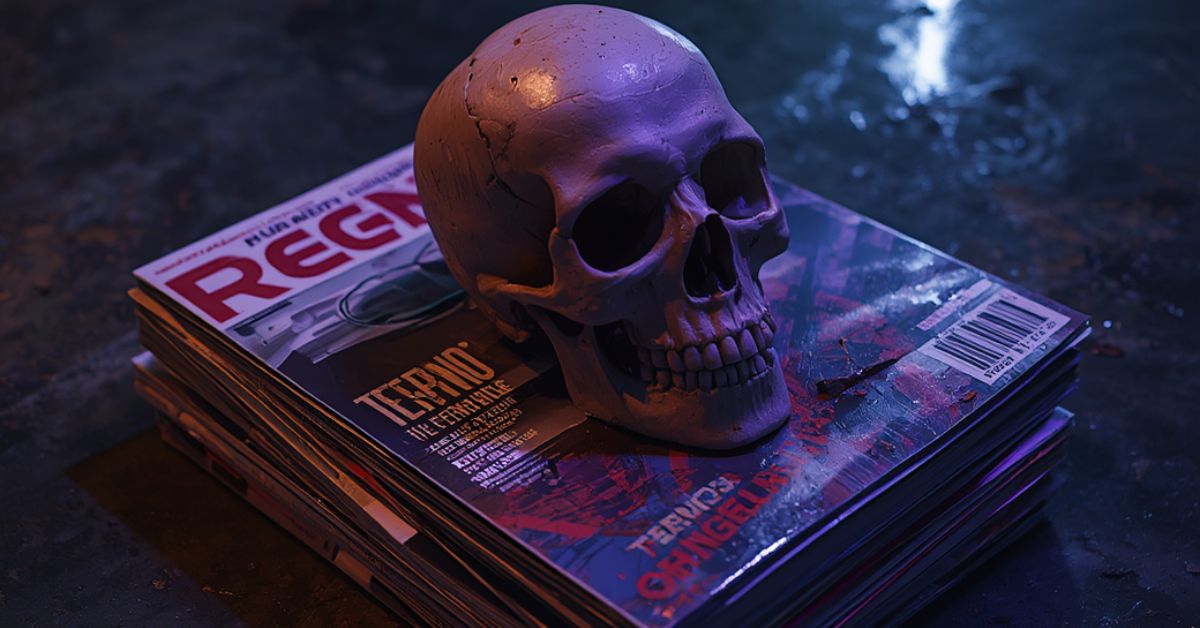
Looking for a media partner? Not that easy at all. Because many have simply vanished. And that is exactly the topic at hand. The decay of music media. The swan song of an era. Anyone who believes that the disappearance of De:Bug or Kultmucke is purely a matter of local mismanagement is wrong. The Anglo-American sphere is bleeding out just the same. The discontinuation of the print edition of the NME (New Musical Express) in 2018, the thinning out of Bandcamp Daily, and the dismantling of Pitchfork by Condé Nast in early 2024 show that even the „giants“ are falling.
As the analysis institute MIDiA Research notes in their report, “The crumbling of music media is a disaster for the music industry,” the sector is currently losing a crucial tool needed to build genuine subcultures in the first place. What is often sold as market consolidation is, in reality, the loss of all institutional authority in music culture. And no, it is not being replaced by other media or social media. Opinions are not facts. That must always remain the basic consensus. Anyone who lets a TikTok influencer advise them on a nose job almost doesn’t deserve any better.
Media sociology provides a rather bitter explanation for why real music journalism is dying: It has lost its cultural authority. In current research (such as in essays on the „Domestication of Music Criticism“), it becomes abundantly clear how much social media has destroyed the distance between artist, critic, and fan.
Molly Phelan writes in “Music Criticism & Consumption In The Digital Age”:
The transition from print media to digital forums and content influencers has fundamentally changed the rhetoric of music criticism. What used to be journalistic contextualization is now an aggressive form of evaluation aimed at establishing social hierarchies. Artists who fit into the grid of influential „tastemakers“ become symbols of „elevated taste,“ while others are ignored or penalized.
Music consumption has become a performance in the digital age. By sharing specific, often obscure playlists or albums on social networks, users signal their affiliation with certain subcultures. The goal is „hyper-differentiation“: People want to avoid being perceived as „mainstream“ at all costs, aiming to stand out from the „herd mentality“ through their own, supposedly more exclusive music selection.
Modern criticism tends to frame music by artists with mental health issues or trauma (Outsider Music) as intellectually superior. This is a form of exploitation: The artist’s suffering is aestheticized and marketed as „authentic,“ while the consumer feels morally superior because they „understand“ „difficult“ art. I had to smirk.
Quantified rating systems (like Pitchfork’s 10.0 scale) have standardized the music industry to such an extent that artists consciously tailor their work to these metrics. This „culture of critique“ creates an atmosphere in which artistic meaning no longer arises intrinsically but is validated through acceptance in anonymous forums and algorithmic recommendations. Ultimately, Bourdieu’s thesis is confirmed here: Taste is not free will, but the display of one’s own social class affiliation.
The Pitchfork Model
In „How Music Criticism Has Changed“, Dalla Riva uses the platform Pitchfork as a kind of „model organism“ for the entirety of music journalism.
He analyzed over 22,000 reviews from the platform spanning the years 1999 to 2021. The results show how an influential platform adapted its strategy to the market (from an indie-rock zine to a broader culture magazine under Condé Nast). One cannot blindly assume that Rolling Stone, Resident Advisor, or smaller blogs developed in exactly the same way. Nevertheless, the observed shifts—the focus on production, „vibe-writing“ („feels like“), and genre expansion—are phenomena that can currently be observed almost everywhere in digital music journalism.
His findings:
- Criticism hasn’t gotten „snootier.“ It was always at this level. We just imagine that texts used to be more sophisticated. In reality, the language has merely adapted to the modern way we consume music: We no longer listen to the songwriting, but to the „vibes“ and the production.
- Pitchfork sacrificed its indie-rock-centric identity to stay relevant. The drastic decline in rock reviews shows that even the „independent“ gatekeepers had to bow to mass-appealing hip-hop and pop in order not to disappear in the digital attention economy.
- Writing about how music „feels“ is a capitulation. Because music production today is so complex and technology-driven, writers find it difficult to pinpoint the craftsmanship (composition). So they take refuge in subjective metaphors to make the sound of a track somewhat tangible.
Which, purely by chance, brings us to the next topic:
The Domestication of Music Criticism
Emily Knoeppel’s essay comes to a stark realization:
Music criticism isn’t dead; it’s just castrated. To survive, the media has submitted to the „influencer economy.“ Anyone who still demonstrates genuine judgment today is considered an arrogant intruder into the „safe spaces“ of fan identities. The result: Most reviews today are nothing more than disguised press releases.
Because real reviews only lead to shitstorms and severed ties with labels, magazines like Rolling Stone have shifted to interviews. These are intellectually worthless but serve perfectly as PR tools for the artist persona. There is no longer any critical engagement, neither with the music nor with moral abysses.
The golden era of criticism was based on a clear separation between the artist and the writer. Today, everyone sits in the same internet trench. If a critic „knows“ the artist (or is dependent on their PR team), it is impossible to dissect the work seriously. Critics today are participants in the fan bubble, no longer its corrective.
Thanks to stan culture, artists like Taylor Swift have become representatives of entire subcultures. A bad review is no longer a judgment of an album, but an attack on the entire community. The industry reacts to this with preemptive obedience and „positive reporting“ that is so sanitized it could fit into any advertising deck for investors.
When everyone is a „critic,“ no one is. We are moving within a culture of mutual affirmation, where people only dare to celebrate that which does not endanger their own social status in the digital space. True criticism is no longer a necessary instrument in this economic structure, but a disruptive factor that is systematically filtered out.
The Loss of Edge
Kelefa Sanneh comes to similar conclusions in “How Music Criticism Lost Its Edge”:
In the past, panning a bad album was an art form (see Greil Marcus or Lester Bangs). Today, it is a social risk. Anyone who writes today that an album is „trash“ doesn’t reap intellectual debate, but death threats. The industry has capitulated: Most critics have learned that „the juice ain’t worth the squeeze“; the trouble isn’t worth the effort.
Criticism of the music is perceived as an attack on the fan base. If a review only aims to avoid offending anyone, it is worthless. We live in an era of „sweet, bland commendations“ that coat everything until no actual statement remains.
The industry produces „Algorithm-Trash“ designed solely to be consumable. The criticism, which should actually serve as a corrective, doesn’t dare to address this out of fear of being labeled „elitist.“ The result is a musical landscape where everything is „somehow okay.“
So, while we seriously imagine ourselves to be more „enlightened“ because of the internet, we have in truth traded our judgment for conformity. As Sanneh correctly notes: The era of the „sweet 2010s“ of criticism is over, but whether we will find the courage to write with „vinegar“ (real, biting criticism) again remains to be seen.
In the past, the critic was an independent filter, a true authority so to speak. Today, everyone shares the same digital space. The consequence? Genuine, harsh criticism is socially sanctioned. In an era where evaluating art is branded by the TikTok generation as „gatekeeping“ and thus almost as a moral failure, consumers no longer want critical discourse. They are merely seeking validation for their own identity. If a critic today tears apart a mediocre album, they are not respected as an expert, but doxxed by toxic fan armies.
The logical consequence: Editorial teams capitulate, cool down their language, and retreat into sugarcoated, sycophantic reporting that hurts no one.
AND IN THE PROCESS, ENTIRELY LOSE THEIR RIGHT TO EXIST.
The massive release takedowns in De:Bug or Frontpage by DJ Bleed back in the day weren’t just „hate speech“ or destructive bashing. They were a form of quality assurance. If an editor tore a record to shreds, it was mostly because they respected the scene. They expected substance, and if the artist only delivered lovelessly produced canned goods, it was openly addressed.
That served two functions:
- As a benchmark: There was a standard. Anyone releasing music had to expect someone with expertise to look under the hood. That forced a certain humility and prevented every second mediocre sound draft from being waved through as an „innovation.“
- As a filter: As a guide. In a time when the supply exploded, the devastating review was a service to the reader. It saved you time when buying records.
A bad review naturally doesn’t generate traffic from happy PR agencies. If you pan a release, next time you won’t get exclusive interviews, no premieres, no invitations. The industry has built up a system of „Access Journalism“: Whoever is nice to the label gets to report exclusively on the release. You scratch my back, I scratch yours. As we discussed earlier: Today, criticism is an „attack.“ If you harshly criticize a release or even genre inventions today, the fans crawl out of their echo chambers and flood your comments with accusations of gatekeeping or elitism. Or ignorance. My absolute favorite complaint.
A proper takedown could sound so wonderfully like this:
„One almost has to admire the consistent lack of success with which an attempt was made to compose music here. The release at hand is not an artistic statement, but a collection of poor software decisions. After just four bars, the trained ear diagnoses an unparalleled sonic anemia: The kick drum – if one can even call this spongy, frequency-wise completely undefined thumping that – possesses neither the necessary punch in the lower mids nor a defined transient that could even begin to acquire the room in the club. It is a physical tragedy.
The harmonic structure is a textbook example of musical bankruptcy. We are not hearing the result of a well-thought-out modal composition here, but the purely random overlapping of presets cobbled together in a clinically dead DAW environment. The modulation? Non-existent. The filter sweeps seem as though the cutoff potentiometer was left to an uninvolved random generator completely lacking any sense of rhythmic phrasing. There is no build-up, no dramaturgy, no arc of suspense – only a monotonous, fatiguing sequence of data packets aiming to put the listener into a state of mental apathy through sheer lack of imagination.
This is not a production for the dancefloor; this is the acoustic equivalent of sterile waiting-room background noise that mistakenly considers itself ‚minimalist.‘ The fact that something like this is even released under the label ‚Techno‘ is an affront to anyone who has ever understood how to create genuine sonic architecture through the targeted use of overtones and phase-correct basses. One can only advise the producer: Either sit down and learn the basics of harmonic progression and frequency selection – or simply stop flooding the already overcrowded channels with such sonic hazardous waste. It is a declaration of technical bankruptcy, garnished with the unbearable arrogance of those who mistake for ‚content‘ what is, in truth, just acoustic garbage.“
The Algorithmic Editor-in-Chief
Well, the human is gone and algorithms are the new editors-in-chief. Another central point from media research is the shift in curation. Formats like Pitchfork or even Frontpage back in the day were based on an editorial premise: A group of people with a massive amount of specialized knowledge (generally known as nerds) tells you which record is important and why.
Today, this editorial selection is replaced by distribution. Spotify playlists and the TikTok algorithm (just the fact that „rithmus/rhythm“ is in this word… induces feelings of hatred) take on the role of the NEXT BIG THING prophet. Stupidly enough, an algorithm has no stance. It explains nothing to you and serves up whatever confirms your previous listening habits. How unbelievably dull is that, please? Your musical development is exactly ZERO. So when the „curator“ is replaced by code, the subculture dies because there is no longer any room for the unknown, the unwieldy, or the uncomfortable. Sound familiar? Yes, we are there.
The economics behind it are shockingly simple and are repeatedly cited by market observers: The advertising followed the audience to digital platforms, and the audience followed music discovery into streaming. Or in plain English: Game over.
The classic refinancing models imploded from several sides simultaneously. In the past, music media had a monopoly on listeners‘ attention. Today, a 10,000-character interview about modular synthesizers competes with millions of cat videos and rage-bait posts on Meta. The curious thing about it: Even highly engaged niche communities won’t save you anymore. The fact that Pitchfork was ultimately scrapped and integrated into the lifestyle section of GQ was not due to a lack of reach, but because corporate management couldn’t find a way to profitably monetize in-depth journalism in today’s attention economy. „In-depth“ is just so 90s… honestly: Who is supposed to read all that shit and why? Nowadays, you let AI think for you, until you fail really hard in a job interview because you somehow internalized that prompting is already knowledge. Yeah sorry, but no.
I could bring it full circle now and claim that the dying of Berlin clubs and the dying of the media are two sides of the same coin. It’s not just „bad luck“; it’s the logical consequence of a market where convenience and conformity have taken control. But nah, I’ll gladly write that down another time.
The Timeline of Demise
The fact that this entire media landscape died off was a creeping process in which a few very specific developments came together. Soberly considered, these are the points that broke music journalism’s neck:
- The Fatal Freebie Culture: We remember. Everything on the net had to be free. Until the subscription models of the big corporations really hit us hard… well, you know. In the early 2000s, all publishers thought you could just give away editorial content on the net and finance the whole thing via banners. Print magazines had sustained themselves through issue sales and outrageously expensive ads (without the chance to even remotely measure success). When people realized they could grab news, reviews, and event dates online for free, the willingness to pay for music journalism was dead overnight. And well, print was eventually dead from 2011 onwards anyway.
A brief interruption for a historical look at the causes of the downfall:
- iTunes and Bleeding the Coffers (from 2003): Before the iPhone was even on the market, iTunes (along with Napster and Co. before it) devalued the physical product. The iTunes Store unbundled the album and trained people to only pay pennies for music on the net.
- The Financial Crisis: Until the 2008 financial crisis, many magazines kept their ad prices artificially high. When the budgets of the music industry and event organizers vanished due to the economic crisis, the ads disappeared, and there was no safety net left. And subscriptions were never enough to continue financing the editorial structures.
- The „iPhone Moment“ (approx. 2009–2011): Radically changed usage habits. With the smartphone, you pulled your info from blogs, forums, and the first social networks. The magazine turned from the „companion through the scene“ into an „outdated weekly review.“ Who still wants to read a review of a record they already listened to via an illegal rip three weeks ago?
- The Death of „Store Culture“ (approx. 2010–2012): The record stores and clubs that used to be the display windows for the magazines changed. The print magazine was no longer on the counter because the record store itself was driven into bankruptcy by the digital shift (MP3s). Without physical presence at cultural hotspots, the print magazine vanished from people’s consciousness.
- Around 2012: The narrative of „free information“ finally took hold. The generation that came into the world with a smartphone in their hand no longer saw a magazine as an object you spend money on, but as an advertising flyer you might grab for free at the club at best. Once the willingness to pay for journalism dropped to zero, print—at least in the sense of a viable business model—was dead in the niche.
Everything that came after—the closures of Intro, Groove (print), or the restructuring of Spex—was just the formal burial of a body whose amplitude had stopped vibrating years earlier… oscillating, swinging… ah, whatever.
Moving on…
In the past, a club or a label pumped its budget directly into De:Bug, Zitty, or portals like Nachtagenten. Today, 90 percent of that cash flows automatically to Meta, Google, or TikTok. Algorithms are more efficient for companies than a handcrafted campaign on a niche blog. The funding base for magazines has simply migrated to Silicon Valley. Also—and this is another truth—because they were MEASURABLE.
PR Replaced Journalism
Journalism is exhausting because it sometimes tears apart a shitty album or asks uncomfortable questions. The music industry and the big festival organizers eventually lost their appetite for that. Why let an editor criticize you when you can just buy clueless influencers who will type out any press text unreflectively for a VIP wristband? Reach has simply replaced substantive quality. Then some people flail around there, reporting how AWESOME it all is. Sure, bro.
The eventization of the scene does the rest. A manageable, nerdy subculture has turned into a gigantic leisure industry. Like the Borg, except they are called Tomorrowland. It’s only about fast info anymore. Anyone who still wants to play the cultural explainer is broadcasting mercilessly past the needs of the masses.
Well, what now? No idea. Text has definitely given way to video. That shortens the whole thing enormously, of course. That’s why it’s more about opinions now rather than analysis. Understandable on some level. It takes genuine time and effort to fabricate something as long as this here.






 and then