

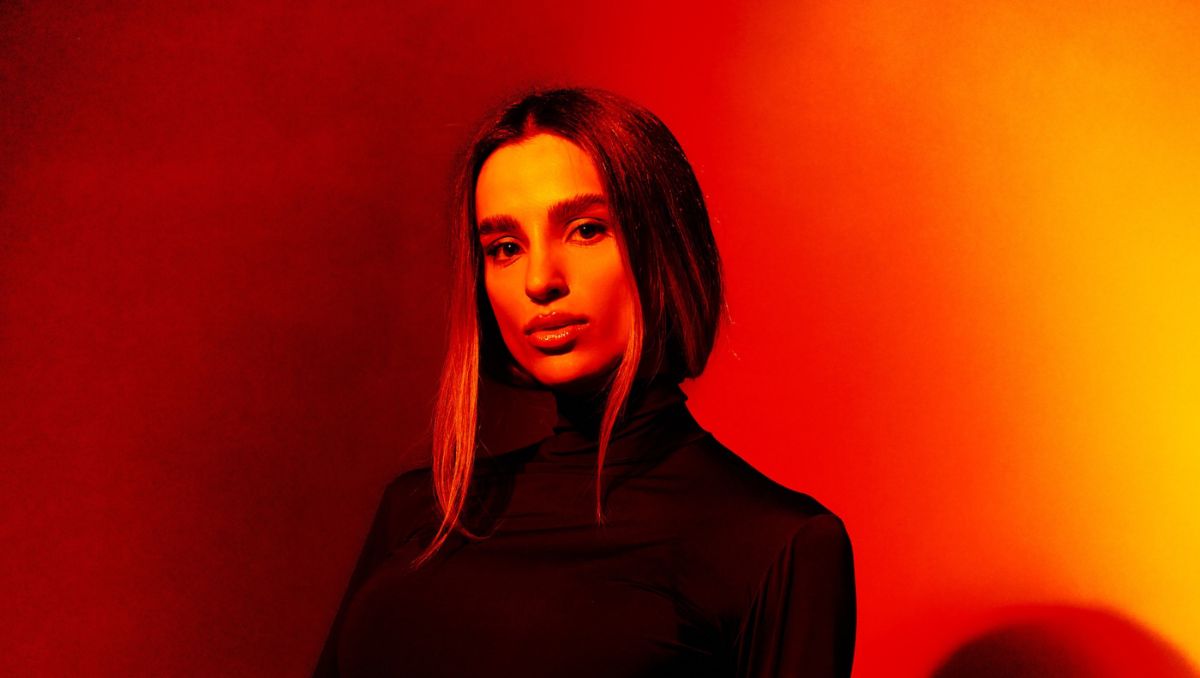
Brazil’s MALU is having a moment. Fresh from appearances at some of the country’s biggest clubs and festivals, including Tomorrowland Brazil and Greenvalley, the São Paulo-based DJ, producer and vocalist is quickly establishing herself as one of the most exciting names emerging from South America’s thriving house music scene.
With her debut Toolroom release ‚Right Here‘ alongside Illyus & Barrientos now landing, we caught up with MALU to talk musical identity, Brazilian club culture, vocals, collaboration, and what comes next as her profile continues to grow.
You’ve built your reputation in Brazil through major festival appearances and support slots alongside artists such as Steve Angello, BLOND:ISH and Mochakk. Looking back, what have you learned from sharing stages with artists operating at that level, and how has it shaped your own approach to DJing and performing?
One of the biggest lessons I’ve learned is that, regardless of the stage of their career, artists who reach that level all have one thing in common: a very clear sense of their musical identity. Sharing the stage with major artists showed me the importance of building a genuine connection with the audience and staying true to what you believe in creatively.
I also learned a lot by watching how they read the energy of the crowd and adapt their sets to the moment without losing the essence of who they are as artists. That inspired me to trust my own musical vision even more and to see every performance as an opportunity to create a unique experience.
Those experiences reinforced my belief that while technique and track selection are fundamental, authenticity is what truly connects people. At the end of the day, the audience is there because they want to hear you and your sound.
Brazil has become one of the most influential electronic music markets in the world, producing artists who are making an impact far beyond South America. From your perspective, what makes the Brazilian scene unique right now, and how has growing up and developing as an artist in São Paulo influenced your sound?
The Brazilian scene is currently experiencing a very strong moment of international visibility, especially with a new generation of producers gaining recognition outside the country. There is a very distinct identity here, which blends dancefloor energy, a wide range of influences, and a very direct way of connecting with the audience.
I was born in the south of Brazil, where I had my first musical references and started shaping my taste. Later on, moving to São Paulo became a game changing in my journey, it’s a city where everything happens, with great connections and some of the best clubs in the world, which allowed me to experience a wide range of situations. This combination ultimately broadened my perspective and amplified everything I had already been building.
Your music sits somewhere between house music’s emotional side and the tougher edge of tech house. How conscious are you of balancing those two elements when you’re producing, and what do you think makes a track connect on both an emotional and physical level?
I don’t really think of these as two separate sides all the time. In the production process, it tends to happen naturally: the emotional part usually comes from the melodies, the vocal ( I love diva vocals), the textures, and the atmosphere I want to create, while the more direct dancefloor energy comes from the groove/percussion, etc.
What I look for is a balance that makes sense within the story of the track. For me, a song works when it can move the body but also trigger a feeling or a memory, of emotion. It doesn’t need to be something overly complex, often it’s small details that create that connection.
I believe what makes a track work on both levels is precisely this intention of not separating emotion and dancefloor energy, but allowing them to coexist in a natural way. This is what makes production both challenging and rewarding.
Your vocals have become an important part of your identity as an artist. When you’re writing or recording vocals, do you approach them as a songwriter first or as a club artist first? How do you make sure a vocal has enough personality to stand out in a club record?
For me, what makes a vocal stand out in a club track is not necessarily complexity, but personality, whether it’s in the choice of tone, the way it’s processed in production, or even small details that make it memorable within the context of the dancefloor.
It’s interesting to think that, even though I place a lot of importance on vocals, there’s no fixed rule in my process. Sometimes the idea starts with the vocal and the instrumental comes later, other times it’s the opposite.
When I work with vocals from scratch, I like to collaborate with strong songwriters, and my role there is more about translating the emotional direction I want for the track rather than trying to control everything. I try to let the process flow naturally.
I think that nowadays there’s a huge amount of music being released, and it’s natural that some of it ends up sounding more generic. Because of that, I really focus on maintaining authenticity in my choices, especially when it comes to vocals, so that each track has its own identity.
In the end, what matters most to me is that the vocal has identity and feels right within the energy of the track.
‚Right Here‘ marks your first release on Toolroom Records alongside Illyus Barrientos. What was the story behind the collaboration, and what did each of you bring to the record creatively?
‘Right Here’ represents two gifts for me at the same time.
I’ve always been a big fan of Illyus Barrientos’ productions, and about two years ago I connected with him and started sending over some tracks. He was always very open and supportive, giving me valuable feedback, which not only strengthened our relationship but also helped me grow as an artist.
‘Right Here’ feels like a natural culmination of that ongoing process over the years, now coming together on a label like Toolroom Records, which understands, values, and believes in the same things we do.
Working with Illyus and releasing on Toolroom is a dream come true, not only for me but I believe for anyone who truly loves house music and follows this scene.
Many emerging artists reach a point where opportunities start arriving quickly. You’ve gone from playing some of Brazil’s biggest venues to landing a release on one of house music’s most established labels. How do you stay focused and continue developing your craft when expectations around a project begin to grow?
When I talk to people close to me, I often say that this is the profession I chose for the rest of my life. So even with the challenges and doubts that naturally come along the way, my focus is to keep evolving and understand that this is just the beginning of a journey that still has a lot ahead.
As opportunities start to grow, I try to approach them with both naturalness and responsibility. Naturalness, so I don’t lose the essence of what brought me here in the first place, and responsibility to keep delivering my best in every project.
At the end of the day, what keeps me focused is this long-term vision. I don’t see anything as a final destination, but rather as stages of an ongoing process of growth as an artist. And along the way, I’ve had the chance to learn from artists like Illyus and others who have many years of experience, which inspires me and helps me keep evolving constantly.
Being a woman in the music industry and part of a project that is still growing is not always easy. But seeing the results helps reinforce that, even with many things still to improve and develop, I’m on the right path.
House music is often discussed in terms of trends, but the artists who last tend to have a strong sense of identity. At this stage in your career, what do you think defines MALU as an artist, and what do you hope people immediately recognise when they hear one of your records or see one of your sets?
I come from a new generation of house music artists, so speaking about house music and placing myself within this scene comes with a lot of responsibility. I have deep respect for the history of house music and the culture that has brought the scene to where it is today, and I try to contribute in my own way by putting what I feel into the music I create.
At this stage, I think what defines me as an artist is this balance between energy and emotion. When people listen to my releases or experience my sets, I want them to feel both: something that moves the body, but also carries a sense of feeling and connection.
You’ve described your sets as a combination of energy, emotion and powerful club moments. If someone came to see you for the first time a year from now, what would you like them to experience, and where do you see the MALU project evolving over the next few years?
If someone came to see me for the first time a year from now, I would want them to feel exactly the essence of what I try to convey today: energy, emotion, and connection on the dancefloor. It’s not just about delivering an energetic set, but about creating moments that have impact and leave a lasting impression.
As for the MALU project, I see it as a continuous journey. I am still at the beginning of a path that has a lot of room to grow, both artistically and in terms of reach. My focus is to keep developing my identity, releasing music that represents me more and more clearly, and bringing this experience to more dancefloors around the world.




 and then