

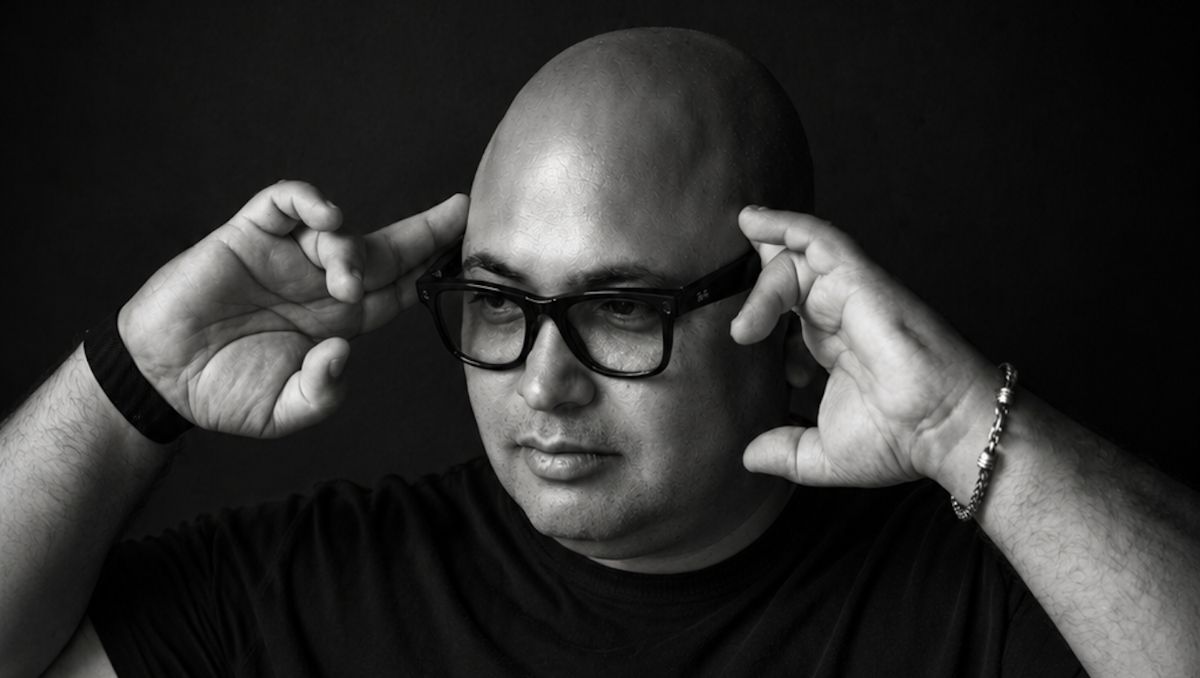
For Oscar Rosmano, club culture began with a hole in the wall of an abandoned Mexico City theatre. Inside, thousands of people were gathered for a rave featuring Sasha, Paul van Dyk and Green Velvet — artists he had never heard of at the time. More than 25 years later, that sense of discovery still shapes his relationship with electronic music. Now a DJ, producer and owner of Lisbon’s Temple Club, Oscar has experienced nightlife from almost every angle. Here, he reflects on changing club culture, protecting independent spaces, building community in Lisbon and how life inside Temple is influencing his own music.
You first discovered electronic music at a Mexico City rave featuring Sasha, Paul van Dyk and Green Velvet. What do you remember most clearly about that night, and did you immediately sense that club culture would become a major part of your life?
At the time, I honestly had no idea who Sasha, Paul van Dyk or Green Velvet were. I actually went home afterwards and searched for them online because I was completely blown away by what Id experienced. Until then, I came from a very different musical background. During the 90s I was heavily into underground metal, especially thrash and death metal.
The rave took place in an abandoned theatre in Mexico City. We had to enter through a hole in a wall, which already made it feel like we were stepping into another world. Inside there were thousands of people, and the atmosphere was unlike anything Id ever experienced.
What struck me most was not just the music but the people. Nobody seemed to be there to get drunk, start fights or pick up girls. Everyone was simply there for the music, each person completely immersed in their own experience. There was a real sense of happiness and freedom. People had travelled from different cities, there were lots of Europeans, and it almost felt like a ritual rather than just a party.
That night completely changed the way I saw electronic music. I left wanting to understand everything about this culture, and without realizing it at the time, it ended up changing the direction of my life.
Having experienced nightlife across several decades, what do you think today’s club culture has gained, and what has been lost along the way?
Technically, everything has improved. The sound systems, production quality and access to music have never been better. But I think we’ve lost some patience. Years ago, DJs were given time to tell a story over several hours. Today, attention spans are shorter and social media sometimes puts more emphasis on moments than journeys. Fortunately, there are still clubs and audiences that truly appreciate musical storytelling, and that’s the environment I feel most connected to.
Temple Club occupies the former Europa Sunrise space, which already held an important place in Lisbon’s electronic music history. How much responsibility do you feel to preserve that legacy while creating a new identity for the venue?
I feel a huge responsibility because Europa Sunrise was an important chapter in Lisbon’s nightlife. At the same time, I never wanted Temple Club to become a museum of the past. My goal has always been to respect that history while building something with its own personality. Every generation deserves its own memories, and hopefully Temple is creating those today.
What did you want Temple Club to contribute to Lisbon that you felt was missing elsewhere in the city?
Consistency. I wanted a venue where people could trust the music, the sound system and the atmosphere every single week. We never tried to be everything to everyone. Instead, we focused on creating nights where the music comes first, whether it’s established international artists or emerging local talent. I believe that’s how you build a genuine community rather than simply organising events.
Running a club gives you a very different perspective from simply performing in one. What has owning Temple taught you about the work, relationships and difficult decisions that sit behind a successful night?
Owning a club teaches you humility. Most people only see the few hours when the doors are open, but behind every successful night there are countless decisions involving artists, staff, suppliers, technical issues and unexpected problems. It has also taught me that relationships matter far more than transactions. The nightlife industry is built on trust, and that’s something I value enormously.
Lisbon has changed significantly in recent years, with tourism, development and increasing pressure on independent venues. How have those changes affected the city’s nightlife, and what needs to happen for its underground culture to remain sustainable?
Lisbon has become an incredible international destination, which has brought many opportunities but also new challenges. Rising costs and increasing pressure on independent venues make it much harder to maintain spaces dedicated to underground music. I believe cities need to recognise that clubs are part of their cultural identity, not simply businesses. If independent venues disappear, a huge part of the city’s creative ecosystem disappears with them.
You’ve hosted international artists, label showcases and local talent at Temple. Which nights or unexpected moments best capture what you want the club to represent?
Some of the most memorable nights have actually come from genres that aren’t my personal favourites. We’ve hosted artists like NOVAH and Fantasm, long before they became some of the biggest names in the hard techno and hard dance scene. Watching the way they connected with the crowd was fascinating. The energy, the commitment from the audience and the atmosphere they created were unlike anything I’d experienced before. Two years later they’ve become global stars within their genres, and it’s been incredible to see that journey.
For me, that’s what Temple is about. It’s never been about booking only the music I personally listen to. It’s about recognising talent, giving artists the opportunity to express themselves, and creating unforgettable experiences for the people on the dancefloor. Whether it’s progressive house, melodic, hard techno or hard dance, if the artist is authentic and genuinely connects with the crowd, that’s what matters most.
After more than 25 years in electronic music, do you still go clubbing purely for enjoyment? What does a great night out look like to you when you’re not performing, promoting or thinking about the venue?
Absolutely, although it’s much rarer these days. The best nights are usually the simplest ones. No expectations, no work, no phone constantly in my hand, just good music, great friends and a DJ who takes me somewhere unexpected. Those nights remind me why I fell in love with club culture in the first place.
Your new single Karyna on Manual Music is deep, melodic and atmospheric, with an uplifting vocal at its centre. How much has your experience of running Temple and watching crowds every week influenced the music you’re making today?
Probably more than anything else. Every weekend I get to experience how people react to music on a top sound system and in a real club environment. You quickly learn the difference between a track that simply sounds good and one that genuinely creates emotion on a dancefloor. Running Temple has made me much more patient as a producer. Rather than chasing trends, I focus on groove, dynamics, atmosphere. I want to create records that people remember long after the night is over.



 and then