

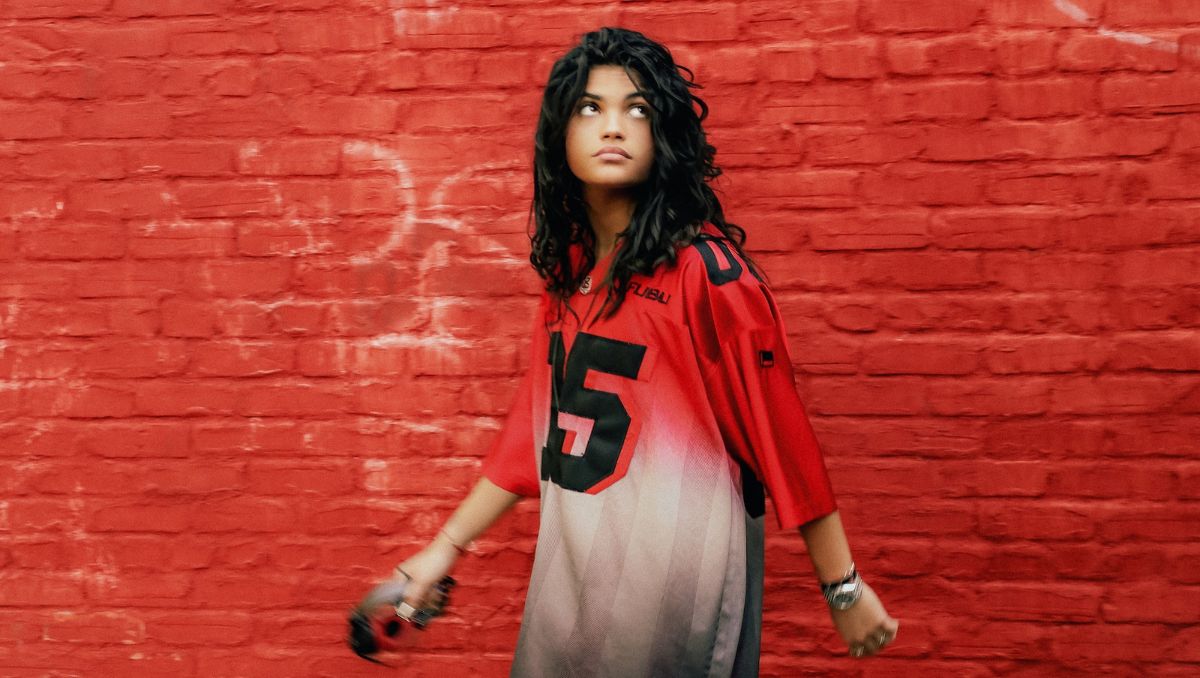
Lilya Mandre’s new single ‘Harper’, out now on KOOKOO Records, finds the Montreal-based producer and DJ exploring a more personal and reflective side of her sound. Built around a striking vocal, spacious production and subtle nods to vintage pop and synth textures, the track balances emotional weight with an understated sense of movement.
Having grown up in Casablanca and gone on to share stages with artists including Keinemusik and Damian Lazarus, Mandre continues to carve out her own path between genres and scenes. We caught up with her to discuss ‘Harper’, creative instinct, Morocco’s influence, and what comes next.
You were born in Seattle and raised in Casablanca before going on to build an international career as a DJ and producer. Looking back, what first drew you towards electronic music, and how did those early experiences shape the artist you’ve become today?
I’ve always loved music so much. It has always been a way for me to express myself. The music I listen to usually says everything about how I feel at a given moment. But I never felt like I really knew how to dance, and electronic music makes me move so naturally. It’s the only type of music where I don’t need to force anything. Since I discovered electronic music, I haven’t been able to stop dancing.
‘Harper’ feels very patient in the way it unfolds, with a lot of space between the elements. Was that restraint something you consciously worked towards, or did the track naturally arrive in that form?
The song was naturally made that way. It’s one of the first songs I ever produced, and I was still learning how to tweak things. The space between the elements came from not overthinking and simply doing what felt right. I wasn’t trying to create anything specific; I was just following my instincts.
There’s a strong sense of nostalgia running through the record, particularly in the synth textures and subtle 80s influences. What drew you towards that aesthetic, and were there any specific artists, films or records that helped shape the atmosphere?
I get inspired by things around me every day, whether it’s the streets, people, music, or simply the way I feel. The guitar has always been something I’ve loved in music, and for me, a good raw vocal feels timeless. It’s vintage in a way that never really gets old.
For the production of this song, nothing was intentional. It all happened very naturally, and everything only started making sense later when I began to understand what the song meant to me. My experiences made my unconscious loud enough to express everything I didn’t yet know how to say.
The vocal sits right at the centre of ‘Harper’ and carries much of its emotional weight. Did the track begin with the vocal idea, or did the instrumental world already exist before that element came into focus?
The way this song started is quite funny; there’s a rapper that I really wanted to collaborate with, which is also why the song has a lot of space. The main element was supposed to be his vocal throughout the entire song. But when he left the studio , I found the Harper vocal and it worked so perfectly that I kept it and got 90% of the song done that same night.
You’ve released music on labels as varied as Crosstown Rebels, Mind of a Genius and now KOOKOO Records. How do you decide where a piece of music belongs, and what made KOOKOO feel like the right home for this record?
I made this song in my apartment in Montreal, where I always had a Unidisc vinyl sitting next to me. KOOKOO is a sub-label of Unidisc, and I’ve known a lot of the team for quite a while, so there was already a real connection there.
When the time came to release the track, it just felt right. In a way, releasing it on KOOKOO became my way of saying goodbye to Montreal. I made the song there, spent some of the most important years of my life there, and releasing it through a label connected to people who had been part of that chapter felt like the perfect way to close it.
Your music often sits between several worlds rather than fitting neatly into one genre. Do you think in terms of genre when you’re producing, or are you more interested in creating a particular feeling regardless of where it might eventually be categorised?
When I started Harper, I had nothing in mind. It was actually supposed to be a rap song.
It really depends on the period I’m in and what I need creatively. Sometimes I go to the studio simply because I want to stay quiet for a few hours and do something I love with nobody around me. Just me, my creativity, and my music.
I’ve had periods where I went into sessions with references, goals, or a very specific direction. But I try to do that as little as possible because I really want to develop my own sound, and maybe even my own genre one day.
You grew up in Casablanca before building an international career that has taken you across Europe, North America and beyond. Are there aspects of Morocco, whether cultural, musical or emotional, that still find their way into your work today?
Of course. As I said earlier, even when I make a song with no particular goal, my unconscious always seems to have one for me.
When it’s time for a release, I always notice so many links between the lyrics, the timing, the people involved, and the visuals. The way I think, the way I’ve been raised, the way I dress, even the music my parents listened to, it all stays with me.
Whether I want it or not, Morocco will always be my biggest inspiration. I grew up there, I loved there, and that’s where my family and closest friends are. My life there definitely shaped my personality, which naturally influences the way I sound, dress, and think.
Over the past few years you’ve gone from emerging artist to sharing line-ups with names like Keinemusik and Damian Lazarus. Looking back, what have been the biggest lessons you’ve learned about finding your own artistic identity in a scene that can often encourage people to follow trends?
I think playing for myself and staying focused is really important.
There were times when I got lost trying to please other people with my sets, and that made me struggle because I no longer knew what story I was trying to tell. Over time, I’ve learned to trust myself more, and that confidence allows me to experiment while still staying true to who I am.
I learn something different from every set, and I genuinely feel like I still have a lot to learn, even though I’ve been DJing for myself for almost ten years now.
I’ve also learned that being a DJ is a job like any other. If I want to do this for the rest of my life, I need to take care of myself and not treat every gig like a party.
You’ve already had a busy run of releases and performances over the last couple of years. Looking ahead, what are your main creative goals for the rest of 2026, and are there any projects, collaborations or new directions that you’re particularly excited to share in the coming months?
I’m very, very excited about Harper’s release and for people to see the visual we are filming. When all the ideas came together in my head, I remember laughing alone because I was shocked by how much sense everything made.
The visual is really the result of what I’ve been through over the past few months: excess, not letting go, making the wrong choices, feeling lost. But what I love most about the video is the ending and the message behind it.
I truly believe that after every low comes a high, and that everything happens for a reason. I can’t wait for people to interpret it in their own way.
I’m also very excited to produce more. I’ve recently started writing poems and singing, and I can’t wait to explore that side of myself and see where it takes me.
Right now, my goal is simply to discover more of who I am by trusting myself and my vision.
I’m also really excited to announce my upcoming tour for July and August too – so many new cities, festivals and venues. I can’t wait to dance in new places with new faces and try out some records I’ve been working on.
Harper is out now on KOOKOO Records



 and then