

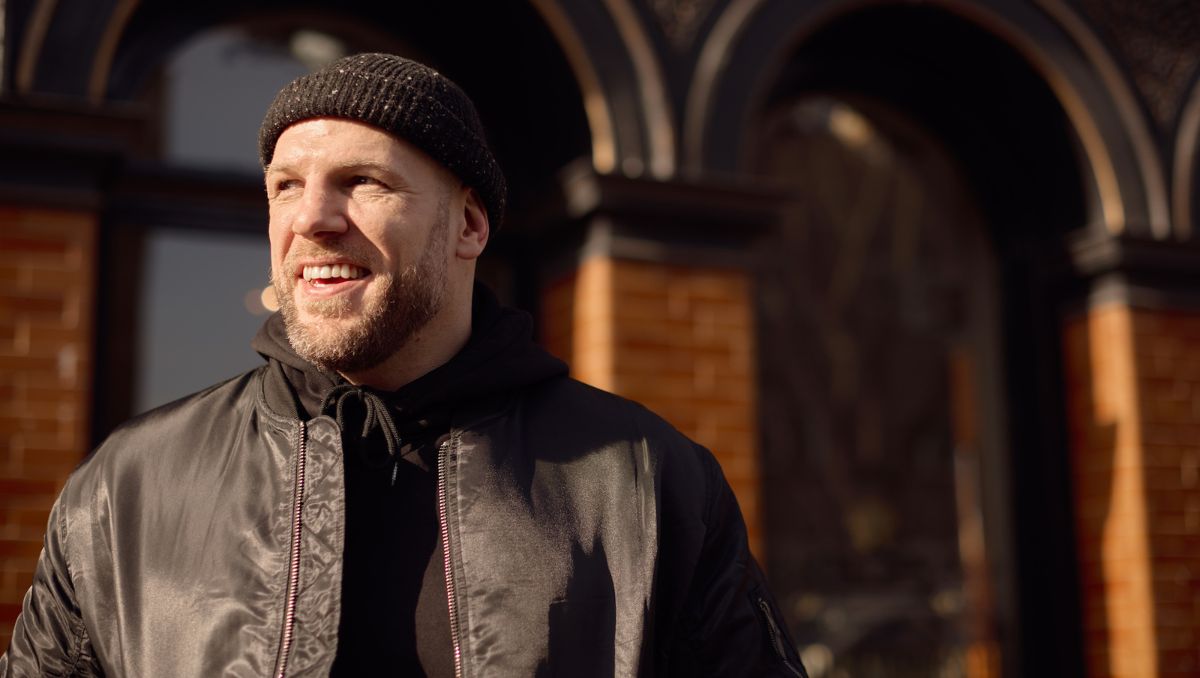
HASKELL’s latest single Shake That, out now on Toolroom, finds him leaning fully into the high-energy, groove-led sound he’s been shaping in recent years. Built around playful percussion and a big-room sensibility, it’s a track designed for peak moments and festival stages, but with the kind of detail that shows Haskell’s growing comfort in the studio.
A former professional athlete turned DJ, producer, and label regular, he speaks candidly about the realities of making music, balancing creative highs with the grind of process, small setbacks with flashes of connection.
Shake That has a percussive, playful feel. Do you imagine specific spaces or crowds when you’re building a track like that?
Whenever I’m writing music, I picture where the track would sit in a set. Some feel like openers, some belong in the middle, and others, like Shake That, are built for the peak. It was designed as a high-energy, festival-ready moment made for big reactions.
You’ve spoken before about the grind of studio work. What part of the process do you actually find the most enjoyable now?
I get the most joy from sculpting grooves and shaping those early drum patterns that set the tone. When an idea clicks and everything falls into place, it feels like magic. That chase to create something people connect with is what keeps me hooked.
Streaming, vinyl, USBs: every DJ has their own habits. What’s your current setup when you’re on the road?
I’ve always used USBs. They’re versatile, I can carry a huge catalogue of music, and they let me adapt to different venues and moods. Some people still debate “vinyl vs real DJing,” but to me it’s like saying you’re not a real commuter unless you ride a horse to work. I’ll stick with USBs.
How do you decide which labels to approach with new music, and what makes Toolroom the right home for certain projects?
My sound leans toward tech house and underground club records. Every label has its own identity, and Toolroom’s is one of the most distinctive. Its top end is so bright and full that it’s instantly recognizable. You don’t wonder if a track will work for Toolroom, you just know.
With the rise of AI in music production, do you see it as a useful tool or more of a distraction for someone at your stage?
AI is a useful tool, especially with vocals. It can re-sing, enhance, and reshape takes into something new. Sometimes it lands, sometimes it doesn’t, but it’s evolving fast. For me, it’s part of the toolkit, not the finished product.
A lot of fans only see the highlights. What’s a recent setback or challenge that’s shaped how you approach your career?
I’ve had plenty of setbacks and I’m still not where I want to be. There are gigs with small crowds, and there are still nights where I’m billed as “James Haskell” to play more commercial sets, when what I really want is to play as Haskell: underground, tech house, club-driven. Playing anything is a privilege, but nothing compares to sharing the music you love.
I’m constantly busy. I run a production company, a podcast business, and I’m a dad. I’m always listening to music while working on other projects, storing away ideas, hooks, or samples. My head rarely slows down, and that overlap between worlds feeds the creativity.
Outside the studio, where are you drawing inspiration right now – books, films, people, places?
I listen to a lot of audiobooks, but when I sit down to read, I prefer fiction. It’s an escape from the intensity of work, travel, and music.
Shake That is described as a statement of intent. If you had to sum up that intent in one line, what would it be?
Shake That was my statement of intent. The energy, the power, the sound—that’s what I want Haskell to stand for. It sets the bar for what comes next.





 and then