

If your latest track were a TikTok meme, which one would it be – and why?
Probably that meme where everything looks calm, but the caption says “internally screaming.” It fits because I often work with contrasts — smooth grooves that carry a quiet tension underneath. My tracks sound controlled on the surface, but there’s always something restless moving inside them.
What picture (or mental reel) describes your sound best?
I’d say it’s like standing in a city at night — the steady pulse of lights, distant voices, and a rhythm that never fully stops. My sound lives between that calm and that motion. It’s deep, grounded, and always built around feeling rather than perfection.
What’s the most absurd place a track idea has ever hit you?
It was in front of a bottle return machine in the supermarket. I was waiting for the clinks to finish when a melody suddenly appeared in my head. Completely random, but that’s what I love about creativity — it sneaks up when you’re doing something completely ordinary.
If you had to turn a random DM into a song title – what would it be?
Maybe “Typing…” — because that’s where everything happens: hesitation, imagination, overthinking. It’s a tiny pause full of potential, and that in-between feeling often ends up in my music.
Your sound as an emoji – which one and why?
I’d pick a rocket. It’s about momentum and direction, that slow build toward something that finally takes off. My sets and productions often follow that same path — rising steadily while staying connected to the ground.
Tell me about your biggest studio fail – and how you fixed it.
Classical mistake: I once let my computer do an update right before starting a new project. Bad idea. It basically turned into a brick for two days. I had to reinstall everything, hunt down lost plug-ins, and rebuild my setup piece by piece. In the end, it taught me a valuable lesson: creativity flows best when technology behaves — and when it doesn’t, patience becomes part of the process.
What was the moment you realized, “Okay… this is more than a hobby”?
There was never one big “lightbulb moment” — it grew naturally. Friends kept asking why I wasn’t doing this full-time, but I always felt that turning it into a job might change my relationship with the music. For me, it’s something sacred — a space without pressure or deadlines. That balance keeps it alive. It’s more than a hobby, but it’s also more than a career — it’s a part of who I am.
Have you ever made a track you loved but everyone else hated?
Not really. I’ve never had a track that people openly hated — and honestly, I love all of them for different reasons. Each one captures a specific moment or emotion, so even if it doesn’t connect with everyone, it still tells a part of my story. Feedback is always subjective — the important thing is that it feels true to me.
Which gig completely threw you off – in the best or worst way?
Playing at Mødular in Cape Town completely blew me away. The energy, the openness, the connection with the crowd — it was one of those nights where everything just clicked. You could feel the room breathing with you. On the other hand, I once played at JuicyBeats Festival, and just before my set, a massive storm hit. The festival had to shut down, and everything … dissolved into rain. It was frustrating, but also a reminder that not everything is meant to happen — and sometimes nature has the final word.
=> Which sound effect makes you weak every single time?
Definitely the flanger. There’s something hypnotic about that sweeping motion — it feels like time is bending for a second. It can turn the simplest sound into something cinematic and emotional. I try not to overuse it, but every time I hear that swirling texture, I get the same goosebumps I did when I first discovered electronic music.
Which current trend in the scene annoys you – and which inspires you?
What sometimes bothers me is how much of the scene has shifted toward self-promotion rather than the actual music. It feels like the performance around it has become louder than the sound itself. But at the same time, I’m fascinated by how technology keeps evolving — especially when it comes to DJ gear. The new tools open up creative possibilities we couldn’t even imagine a few years ago. It’s inspiring to see how far expression can go when used with intention.
What needs to change so newcomers can get into the scene more easily?
It’s a difficult question, because I feel there are already more newcomers than the scene can actually hold. The challenge isn’t really about getting in — it’s about standing out and staying true to yourself in a very crowded space. Maybe what needs to change isn’t the system, but the mindset: less chasing trends, more focusing on building something authentic and lasting.
If you could redesign a club or festival from scratch, what would it look like?
I think it would be a small, focused festival — one that celebrates a single musical direction instead of trying to please everyone. No overpriced headliners, no unnecessary spectacle — just a space where the music and the crowd can really connect. For me, the magic lies in intimacy: when you feel the same energy moving through everyone around you. That’s what a perfect festival should be about.
What’s your ultimate “drop everything and dance” track?
There are quite a few, but two that always get me are “Walls” by Max Cooper and “Cosmic Dance” by Eric Sneo. Both tracks have that perfect balance of depth and drive — they build slowly, but when they open up, you just can’t stand still. They capture everything I love about electronic music: emotion, tension, and pure movement.
How does your background or environment influence your sound?
My roots are in Deep House, and over the years my sound has evolved naturally — shaped by the places I’ve lived, the people I’ve met, and the way electronic music itself keeps changing. Every stage of my journey has left a trace in what I play and produce. I think that’s what makes it interesting: the sound is never static, it grows with you.
Which piece of gear would you save if your studio was on fire?
Honestly, I’d probably grab my little plush unicorn. It’s been sitting in my studio for years — a gift from my wife and a quiet companion while I’m working on music. It doesn’t make any sound, but somehow it keeps the vibe right. Maybe it’s my lucky charm… or just a reminder not to take things too seriously.
Do you have a production trick that really shouldn’t work – but does?
I wouldn’t call it a trick — but sometimes, I find inspiration in things that already exist. It could be an old sound, a forgotten draft, or just a small idea that never quite worked before. I revisit it with fresh ears, change the context, and suddenly it makes sense. It’s less about breaking rules and more about giving old moments a new perspective
What’s one sample you’d never give away?
There’s one sample from a video game that I’ve been holding onto for years. It’s got this strange, nostalgic energy — like a fragment of a dream you can’t quite remember. I’m not even sure I’ll ever use it, but I can’t let it go either. Maybe it’s more about the memory than the sound itself.
Analog or digital – and why?
Both, really. I learned to DJ on good old vinyl — it taught me patience, focus, and how to truly listen. But over time, I embraced the digital side as well. Technology evolved, and with it, the creative possibilities. For me, it’s not about choosing one over the other — it’s about understanding both worlds and knowing when to let each one speak.
What’s next for you – and what’s completely new about it?
Right now, I’m finishing my next track — it’s always exciting to see an idea slowly take its final shape. But what I’m really looking forward to is playing at the Amsterdam Dance Event. The whole city turns into one big club, full of music, energy, and inspiration. It’s my first time experiencing ADE from behind the decks, and I can’t wait to feel that atmosphere and be part of it.
If you had to collaborate tomorrow with an artist from a totally different genre, who would it be?
I think I’d go for a Drum & Bass artist. That genre has always fascinated me — the rhythm, the precision, the way it balances speed and emotion. It’s a completely different world in terms of energy, but I feel there’s a deep connection in how both styles use tension and release. A collaboration like that would definitely push me out of my comfort zone — in the best possible way.
Imagine it’s 2030, you’re playing your dream set – where is it and what’s the last track you play?
By 2030, music will probably sound completely different — genres will keep blending, evolving, dissolving. But if I could choose, my dream set would be somewhere open, surrounded by nature, just as the sun is rising. And the last track I’d play would be “November Rain” by Matthias Meyer. It has that timeless emotion — deep, melodic, and full of light and melancholy at once. The kind of feeling I hope will always stay in electronic music, no matter how much it changes.
EN
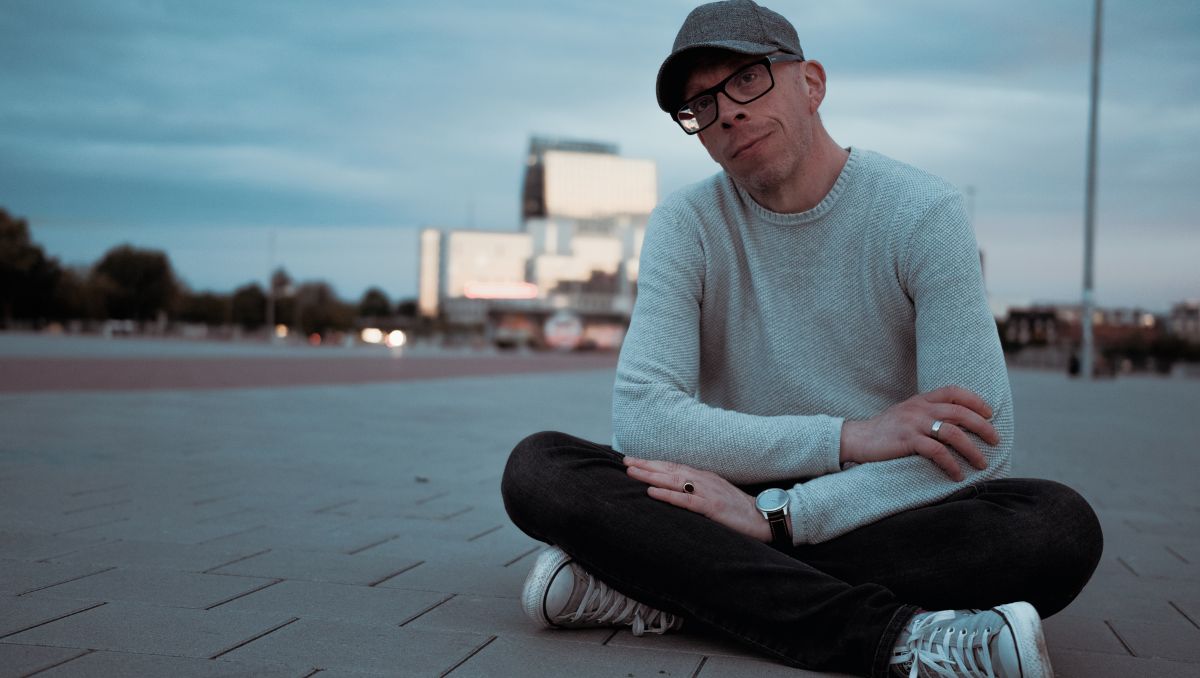
The emerging era of electronic music in the late 1990s led Herr Oppermann behind the decks at an early age. Driven by his enthusiasm for the electronic sounds of synthesizers, he quickly developed a deep connection to this music, which continues to shape his work today. His passion began with his own events and a residency at a club in his hometown. From there, his path led him to further milestones, including a weekly radio show and performances at clubs such as the legendary Stammheim in Kassel, Warehouse in Cologne, Uebel & Gefährlich in Hamburg, Mødular Club in Cape Town, and the JuicyBeats Festival in Dortmund, just to name a few. As a DJ, Herr Oppermann transfers his dedication to music to the audience, combining classic and modern elements of electronic music. His style describes a varied journey between deep, minimalist elements of Melodic House & Techno, Deephouse and Afro-House, making each of his sets a journey with plenty of variety. With releases on labels such as Tach & Nacht, Amber Recordings, and Deep Stories, he also showcases his production skills by transferring his intimate relationship with electronic music into his own interpretation of Melodic Tech House. His commitment to the creative diversity of the scene is underscored by his work as host of the renowned Klangextase podcast series and for the Deep Stories label crew.
DE
Die aufstrebende Ära der elektronischen Musik in den späten 90er Jahren führte Herrn Oppermann schon früh hinter die Decks. Angetrieben von der Begeisterung für die elektronischen Klänge der Synthesizer, entwickelte er schnell eine tiefe Verbundenheit zu dieser Musik, die bis heute seine Arbeit prägt. Seine Leidenschaft begann mit eigenen Veranstaltungen und einer Residency in einem Club in seiner Heimatstadt. Von dort aus führte ihn sein Weg zu weiteren Stationen, darunter eine wöchentliche Radioshow sowie Auftritte in Clubs wie dem legendären Stammheim in Kassel, Warehouse in Köln, Uebel & Gefährlich in Hamburg, Mødular Club in Kapstadt, oder dem JuicyBeats Festival in Dortmund, um nur einige zu nennen. Als DJ überträgt Herr Oppermann seine Hingabe zur Musik auf das Publikum und verbindet dabei klassische und moderne Elemente der elektronischen Musik. Sein Stil beschreibt eine abwechslungsreiche Reise zwischen deepen, minimalistischen Elementen von Melodic House & Techno, Deephouse und Afro-House und macht jedes seiner Sets zu einer Reise mit viel Abwechslung. Mit Veröffentlichungen auf Labels wie Tach & Nacht, Amber Recordings und Deep Stories zeigt er auch seine Produzentenqualitäten, indem er seine innige Beziehung zu elektronischer Musik in seine Art von melodischen Tech-House überträgt. Sein Engagement für die kreative Vielfalt der Szene wird durch seine Arbeit als Moderator der renommierten Klangextase Podcast-Serie und für die Deep Stories Label Crew unterstrichen.
Socials
https://www.instagram.com/herr_oppermann/
https://www.facebook.com/herroppermannhh
https://www.beatport.com/de/artist/herr-oppermann/686712
https://herroppermann.de/




 and then