

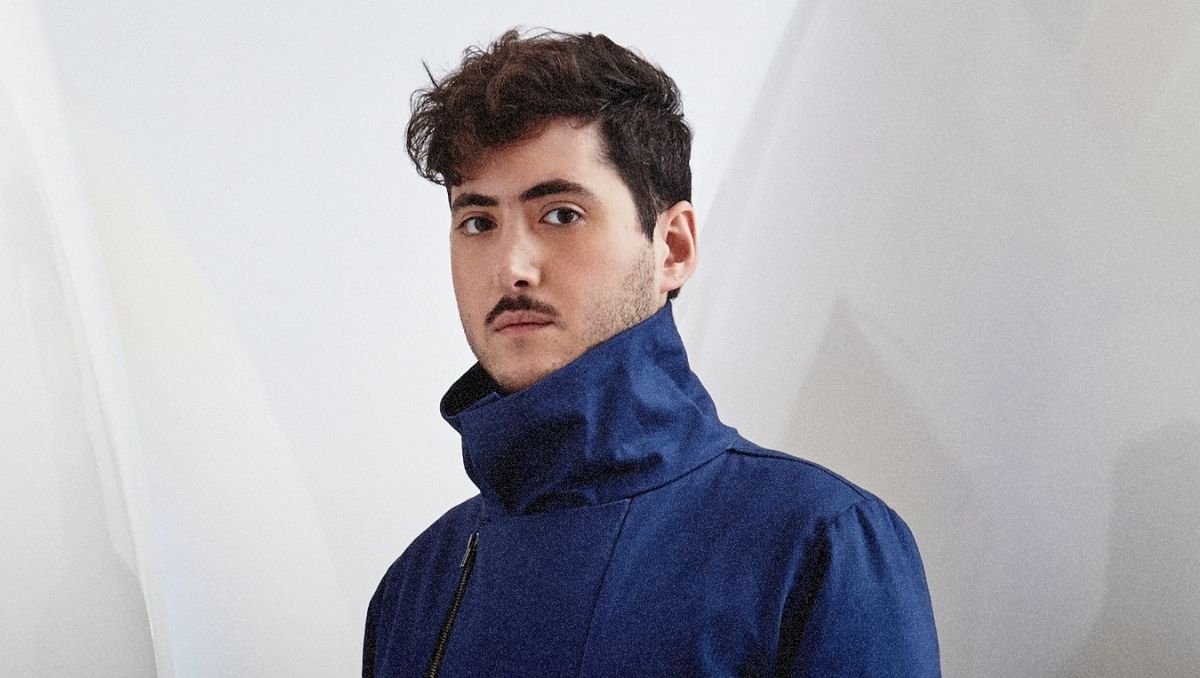
Amirali has spent much of his career operating just outside neat categories. Classically trained, shaped by migration, and as invested in albums as he is in club records, his output tends to favour patience, musical detail, and long arcs over quick impact. Recent years have seen him move comfortably between labels like Crosstown Rebels, Diynamic, Sincopat and his own Dark Matters imprint, building a catalogue that values mood and structure as much as momentum.
His latest EP for Mélopée Records sharpens that focus. Across “Endless High” and “Emanate”, Amirali leans into disco-rooted rhythm, progressive flow and traces of trance, letting piano lines, space and tension do the heavy lifting. The release, completed by a long-form Huxley remix, feels deliberately unhurried, more concerned with journey than immediacy.
In this interview with The Club Map, Amirali reflects on the formative listening that shaped his instincts, the club experiences that anchored his sense of connection, and why staying open, patient and curious still feels essential as both his own work and the wider scene continue to shift.
Your path into electronic music hasn’t been especially linear. Looking back, what parts of your early life and upbringing still show up in your music today, even if only subconsciously?
My childhood had a huge impact on me musically. I grew up listening to my dad’s record collection, ranging from classical music to Muddy Waters, CAN, and The Velvet Underground, and my early musical training was classical piano. From a young age, I was drawn to the idea of creating my own music, coming up with small pieces and memorising them. Later on, discovering artists like The Prodigy, Massive Attack, The Chemical Brothers, and Portishead really opened my world to electronic music. Those early experiences, the curiosity and exposure to groundbreaking sounds, still show up in my music today. At the same time, I try to approach music with a beginner’s mindset, staying excited about doing something new. Once you become too attached to a specific style, it can start to limit you. That’s when your world narrows to a signature sound, and for me, that’s when creativity begins to fade.
Before labels and releases entered the picture, what were the sounds or records that really pulled you in and made this feel like something you wanted to commit to long-term?
Beyond the bands I mentioned earlier, artists like Vangelis, Kraftwerk, Air, Daft Punk, and Jean-Michel Jarre had a big influence on me as well. I’ve always had a wide curiosity for different sounds. When I moved from Iran to Canada, my relationship with music became more serious. I started going to clubs and live shows, and one of the first electronic acts I saw was Underworld, which was unforgettable. I also experienced DJs like Danny Tenaglia playing 12-hour sets, as well as those legendary extended sets by Sasha and Digweed, along with many other incredible DJs who used to come through my hometown. Back then, there were no phones or cameras. People were fully present, completely immersed in the music, and there for the shared experience. That sense of focus and connection awakened something in me and made me realise I wanted to commit to music long-term.
You’ve lived and worked across very different cultural environments. How has that shift shaped your relationship with club music and the way you think about connection on a dancefloor?
That sense of connection and chemistry is what really made me want to pursue music. I often find myself bridging the energy of the dancefloor with a more live, almost band-like mindset, and that perspective naturally carries over into how I write. Sometimes I create tracks with a clear song structure that feel almost like they were recorded with a band, yet still work on the dancefloor. It’s always a challenge, but a positive one, because I’m drawn to both worlds. Combining them has helped me develop my own voice. At the same time, I’ve also made music that’s completely leftfield and not intended for the club, as my albums tend to be more conceptual and exploratory. And as I mentioned earlier, I always try to approach music like a beginner, because that sense of discovery is what keeps me excited and creatively open.
“Endless High” has a clear sense of lift, but it never rushes to the payoff. When you’re writing a track like that, how much are you thinking about patience and tension rather than instant impact?
Anticipation and tension are always on my mind when I’m making music. Right now, a lot of dance records focus on instant impact, big drops and long drum fills, and that doesn’t really excite me. Even in clubs today, you often hear DJs playing one high-energy track after another, and the sense of storytelling or dynamics can feel a bit lost. I think part of that comes from the crowd as well, with people chasing that immediate hit of excitement.
That said, there are still smaller pockets in the scene that care deeply about quality dance music, where like-minded people come together purely for the music and that sense of connection. Dance music has become so mainstream that it now exists in many different forms, from intimate club nights to huge festivals, and not all of them are necessarily relatable to one another.
When I work on a track like Endless High, I try to find a balance. I want it to lift and evolve without rushing to the payoff, keeping the listener engaged while allowing the tension to breathe. It’s a fine line, and it’s something I constantly focus on when arranging a track, because that sense of journey is what really makes music resonate on the dancefloor.
Disco has a funny way of reappearing in serious club spaces once it’s stripped back and reworked. What keeps you coming back to disco-leaning grooves, and how do you stop them tipping into nostalgia?
I’ve always been drawn to sampling, but I didn’t really have the chance to fully explore it until the past couple of years, when it became a big part of my productions. Finding a special moment in an old record, whether it’s a vocal or an instrumental phrase, gives me a huge amount of energy and inspiration. It feels like collaborating with an artist from a different era, and that spark often becomes the starting point for a new project. Of course, you have to approach it properly and respect the process, including clearing the rights, but when it works, it’s absolutely worth it.
“Emanate” feels very comfortable taking its time, especially in the way the piano and melodies unfold. Do you enjoy letting a track breathe, even if that means trusting the listener a little more?
I’ve realised over time that leaving space in a track can be really powerful. Sometimes the fewer elements you have, the more it stimulates the listener’s imagination, and that can make the experience feel deeper. For ‚Emanate‘, that was exactly the intention, letting the piano and melodies unfold slowly creates almost a trance-like euphoria, taking the listener into a different space. Trusting the listener in that way is always a bit of a challenge, but it’s also what makes the track more immersive.
There’s a strong sense of flow across this EP rather than two standalone club tools. Do you still think in terms of records being listened to from start to finish, not just dropped into a set?
Thanks for saying that. I’ve always valued the album as an art form, and even with a smaller EP, I like to think of it as a complete journey. My feelings and perspective change day to day, and I see myself more as an artist than just a DJ. I’ve released two albums so far and have just finished a third, which I’m planning to release soon. For me, music isn’t just something to drop into a set; it’s an experience, a journey, and it’s what keeps me grounded and sane in this crazy world.
Your music often sits between warmth and control, emotion and restraint. Is that balance something you actively work towards, or is it just where your instincts land?
I try not to overthink it or analyse myself too much; though with my OCD brain, it sometimes happens anyway. When I’m in the studio, I try to stay in the present and let the ideas flow, filling the blank canvas in front of me with whatever comes through. So I’d say it’s more instinctive than something I consciously plan.
The Huxley remix stretches “Endless High” into a proper long-form journey. Do you enjoy hearing your tracks opened up like that, or does it feel slightly unnerving handing them over to someone else?
I’m usually open to having my tracks remixed by artists I admire, though I do it only occasionally; it’s not a blueprint for my releases. Over the past 10 years or so, only a handful of artists have remixed my tracks, and Huxley did an amazing job. His version really turns the track into a slow-burning journey and is definitely a strong addition to the package.
As this year draws to a close and you look toward 2026, what would you like to see from the new year, both in terms of your own personal goals and the scene in general?
On a personal level, I’m focused on growth and health. Over the past year, I’ve been living a healthier lifestyle, working out regularly, eating well, and cutting back on drinking. In the music scene, stamina and being in good shape are essential to keep going long term, so that’s something I want to continue into 2026.
As for the scene, I’d love to see more open-mindedness, with artists taking more risks and audiences genuinely engaging with the music rather than just filming for social media or attending events because it’s trendy to see a certain DJ. Of course, you can’t fight that entirely, but it’s encouraging to see more clubs adopting no-phone policies. Ideally, I’d like to see artists being more inventive and crowds being more present and fully engaged.
Endless High is out now on Mélopée Records






 and then